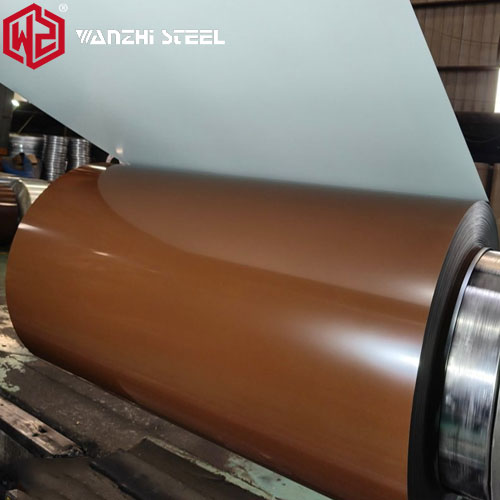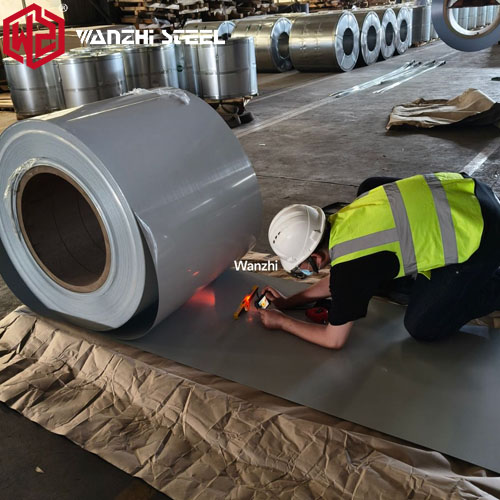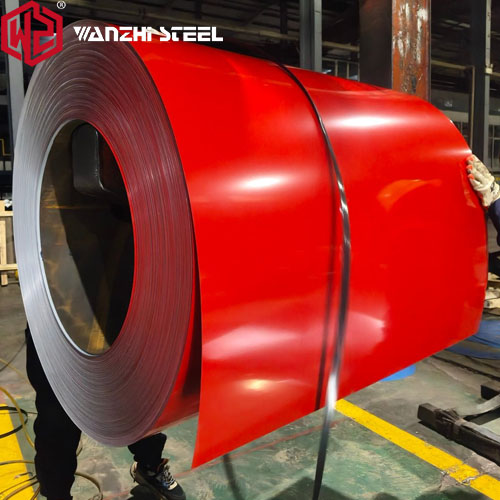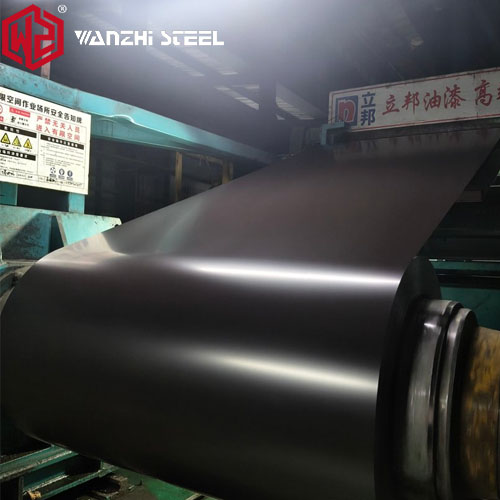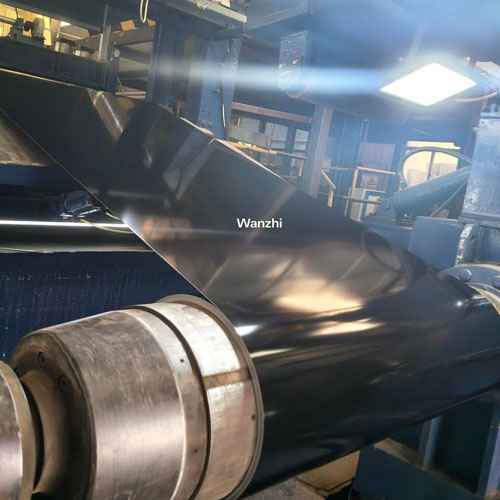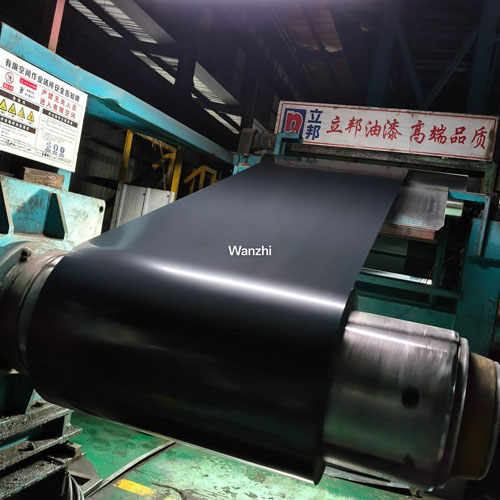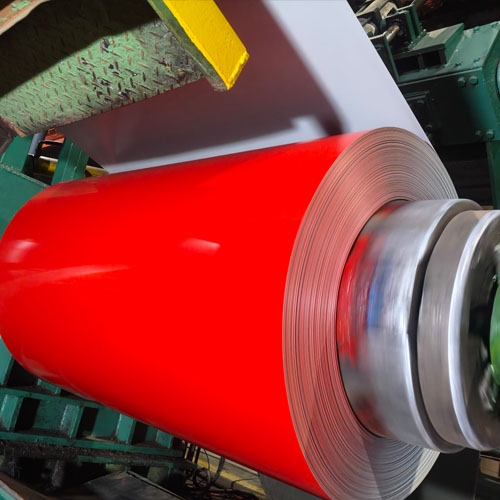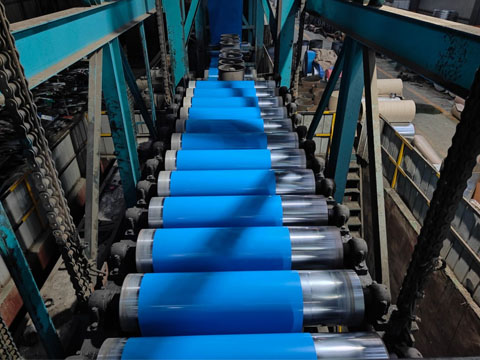

Currently, PPGI is available in a wide range of thicknesses on the market—for example, approximately 0.12–1.2 mm—while common thicknesses in actual projects include 0.35, 0.40, 0.45, 0.50, 0.60, and 0.80 mm. The choice of thickness depends primarily on the application scenario, load-bearing capacity, wind resistance, processing methods, and corrosion resistance lifespan. Let’s take a look at how to select the appropriate thickness for your project.
What Does PPGI Thickness Mean?
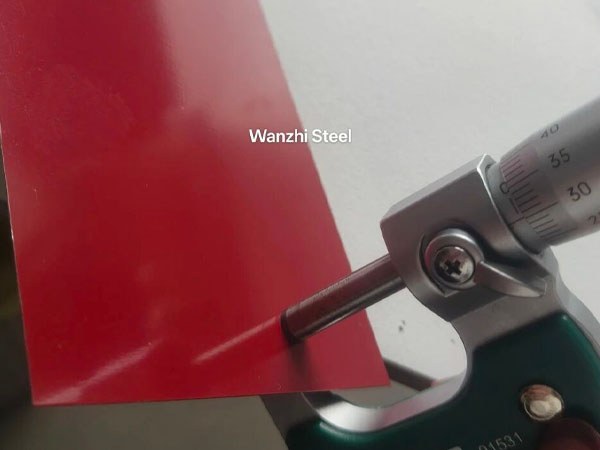
In actual transactions and engineering applications, the thickness of PPGI steel coils consists of the base material thickness plus the coating thickness. Although the coating is very thin, it must still be included in the total thickness calculation.
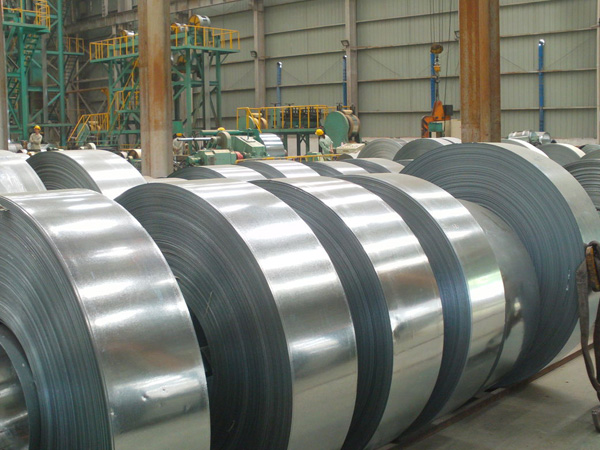
- The base material of PPGI steel coils is hot-dip galvanized steel coil. The base material thickness refers to the thickness of the hot-dip galvanized steel coil itself. It determines the structural strength, bending resistance, and load-bearing capacity of the color-coated coil and serves as the core reference standard for engineering design and fabrication.How Does Thickness Affect PPGI Performance?
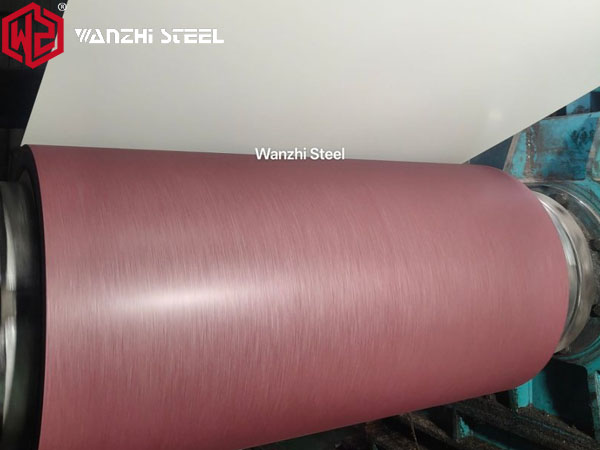
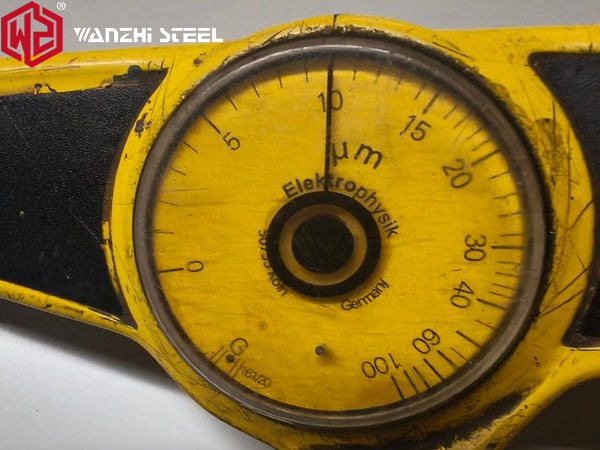
- The organic coating thickness refers to the total thickness of the topcoat and backcoat on the finished PPGI steel coil. The total thickness of the paint layers is only 0.02–0.05 mm (commonly expressed in μm, 15–60 μm).
These two thicknesses have a significant impact on the product; it is recommended that purchasers clearly specify the requirements for both thicknesses when signing a contract.

How Does Thickness Affect PPGI Performance?
PPGI steel coils have a direct impact on the core performance of the product. Different thickness ranges result in vastly different mechanical properties, processability, and application scenarios—differences that cannot be compensated for by adjusting the thickness of the organic coating or the zinc layer.
Structural Rigidity and Resistance to Deformation
- Thin-gauge PPGI steel (less than 0.3 mm) has low hardness and poor rigidity, making it prone to sagging, bending, and deformation under slight external forces, wind pressure, or its own weight.
- Medium- and heavy-gauge PPGI steel (0.5 mm and above) offers significantly improved tensile strength and structural stability, enabling it to withstand standard wind loads, snow loads, and impact compression, making it suitable for long-term outdoor building envelope structures.
Forming and Processing Properties
- Ultra-thin PPGI steel has good ductility and is easy to stamp, roll, and bend into complex shapes; however, the coating is prone to cracking during deep processing.
- Excessively thick PPGI steel (thickness exceeding 0.8 mm) has high hardness, requiring greater pressure during bending and stamping; if processing equipment is not properly matched, edge chipping and paint peeling are likely to occur.
- Moderate thickness (0.3–0.6 mm) strikes a balance between formability and structural performance, making it the most widely used specification.
Overall Service Life Stability
- Thin PPGI steel sheets are prone to localized deformation after prolonged exposure to wind and rain. Deformed surfaces accumulate rainwater, dust, and corrosive substances, which indirectly accelerate localized rusting and aging.
- Thick PPGI steel sheets maintain their flatness for extended periods, reducing dirt accumulation and indirectly extending the overall service life of the sheets.
For more videos about our factory producing PPGI, please visit this page → https://wanzhi-steel.com/video-center/ppgi-steel-video/
How to Choose the Right PPGI Steel Coil Thickness?
When purchasing PPGI steel coils, thickness is a key parameter that affects material cost, processability, and the strength of the final product. However, thickness alone does not determine whether a steel coil is suitable for a particular project.
For example, even when used for roofing, the specifications required for ordinary residential buildings, industrial plants, and coastal structures may differ. In addition to steel sheet thickness, factors such as base material strength, galvanized coating weight, coating system, corrugation design, and support spacing must also be considered.
Therefore, the correct procurement approach is not simply to ask, “Is thicker PPGI steel coil always better?” It is more important to understand the load-bearing capacity or processing performance required by the project itself.
When selecting the thickness of PPGI steel, the most crucial factor is to know your intended application. Below are thickness recommendations for different usage scenarios.
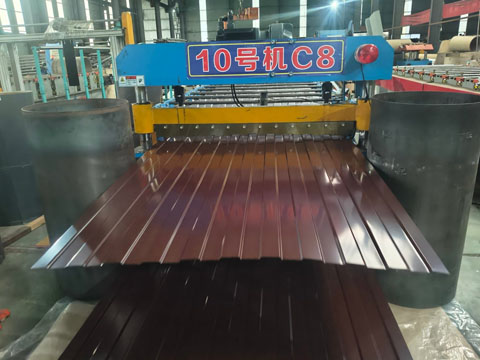
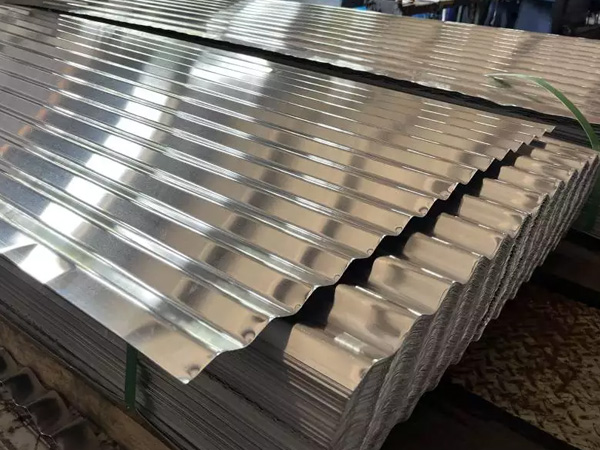
PPGI Thickness for Roofing
PPGI roofing sheets must withstand wind pressure, snow load, rain impact, and long-term outdoor aging; therefore, their thickness must be selected to match the local climate and purlin spacing, and should not be arbitrarily reduced solely to save costs.
Africa
- In most parts of Africa, where winds are relatively light and the climate is dry, a standard base material thickness of 0.35–0.40 mm is sufficient for the roofs of simple factories, temporary warehouses, and small canopies.
- This thickness meets basic weather resistance requirements and offers excellent value for money for civil engineering projects with limited budgets.
Coastal and Rainy Regions
- For coastal areas, regions with heavy rainfall and strong winds, and projects with purlin spacings greater than 800 mm, a base material thickness of 0.45–0.60 mm is the optimal choice. This effectively prevents issues such as roof sagging, wave-like deformation, and screw hole cracking caused by long-span supports.
- For industrial plants, logistics warehouses, and permanent building roofs, a thickness of 0.5 mm or greater is the most stable standard choice.
Areas with Strong Winds and Heavy Snow
In high-altitude areas with strong winds and heavy snow, the thickness of PPGI (pre-painted galvanized steel sheets) should be increased to 0.6–0.8 mm to enhance the overall structural load-bearing capacity and resist deformation and damage caused by extreme weather.


PPGI Thickness for Wall Panels
Wall panels are subjected to far less wind pressure and dead load than roofs, so there is greater flexibility in selecting their thickness. The primary considerations are flatness, aesthetic appeal, and impact resistance.
- For interior partition walls, factory interior wall panels, and decorative enclosure walls not subject to external impact, a base material thickness of 0.25–0.35 mm is entirely suitable. This material is lightweight, easy to install, and cost-effective, meeting all interior decoration and enclosure needs.
- For exterior building walls, factory perimeter walls, and the exterior walls of container houses, a thickness of 0.35–0.50 mm is recommended. This thickness ensures the wall panels remain flat, minimizes the risk of bulging or warping after long-term outdoor exposure, and provides resistance to minor daily impacts and wind erosion.
- For applications with high requirements for appearance and durability—such as the exterior walls of public facilities and the perimeter walls around factory entrances—it is recommended to prioritize a thickness of 0.5 mm to prevent localized deformation from affecting the overall decorative effect.


PPGI Thickness for Sandwich Panels
Since the outer panels of metal sandwich panels are exposed to the elements outdoors, the standard substrate thickness is typically 0.30–0.50 mm. For high-standard cleanrooms, cold storage facilities, and permanent industrial workshops, it is recommended to use outer panels with a thickness of 0.4–0.5 mm to ensure weather resistance and flatness.
The inner panel serves only a protective and decorative purpose and is not subjected to external wind pressure; therefore, its thickness is typically kept between 0.20 and 0.30 mm. Thin color-coated steel sheets can reduce the overall weight of the sandwich panel, facilitating rapid on-site installation without compromising the panel’s overall thermal insulation and structural performance.


PPGI Thickness for Home Appliances
PPGI used in home and industrial appliances demands higher standards for surface flatness and stamping precision. Thickness selection prioritizes processing accuracy and surface quality rather than a blind pursuit of thickness.
- For small household appliances such as light fixture housings, small fan casings, and appliance decorative panels, thin PPGI steel sheets with a thickness of 0.20–0.30 mm are the mainstream choice. This material offers good ductility, making it suitable for precision stamping, bending, and forming, without issues such as surface wrinkling or paint cracking.
- For medium- to large-sized appliance housings—such as refrigerator side panels, washing machine casings, and air conditioner outer panels—the standard thickness ranges from 0.30 to 0.50 mm. This thickness ensures that appliance housings remain flat and sturdy, prevents minor deformation during long-term use, and meets the precision processing requirements of automated production lines.
- For industrial electrical cabinets, power distribution box housings, and decorative panels for heavy-duty equipment, PPGI with a thickness of 0.50–0.60 mm is selected to enhance impact and deformation resistance and ensure the structural stability of the electrical equipment.
What specifications should be confirmed before purchasing?
When purchasing PPGI steel, it is recommended that you do not simply tell the supplier, “I need 0.5 mm PPGI steel coils.” Instead, you should provide the supplier with your complete requirements: 0.5 mm + DX51D + Z275 + specified paint system + required color.
A Decision-Making Process That Purchasers Can Use Directly→You can determine the specifications in the following order:
- Step 1: Determine the End Use: Roofing? Wall cladding? Sandwich panels? Home appliances? Doors? Equipment?
- Step 2: Determine Structural Requirements: Load-bearing capacity, span, purlin spacing, wind load, snow load.
- Step 3: Determine the Base Material Grade: DX51D? DX52D? S280GD? S350GD? S550GD?
- Step 4: Determine steel sheet thickness, For example, 0.4 / 0.45 / 0.5 / 0.6 mm.
- Step 5: Determine the galvanized coating, For example, Z100, Z120, Z180, Z275, etc.
- Step 6: Determine the Coating System: PE, SMP, HDP, PVDF.
- Step 7: Determine the Color and Surface Finish:RAL colors, gloss level, texture, etc.
This ensures that the PPGI specifications you procure are complete and best meet your project requirements. If you have a project requiring PPGI steel coils, please contact us. We will recommend the most suitable products based on your intended use, operating environment, budget, and other factors.
FAQ
Base material thickness is the only reliable inspection standard in engineering and international trade. Coating thickness is thinner and subject to variation, whereas base material thickness is stable and does not change due to coating processing. All third-party inspections and engineering acceptance tests are based on base material thickness.
No. Strength is influenced by the base material grade. For example, a 0.5 mm DX51D PPGI coil and a 0.5 mm S350GD PPGI coil have the same thickness, but the S350GD has higher mechanical strength.
Not necessarily. Service life primarily depends on the zinc coating thickness and coating quality. Thicker PPGI steel can only prevent deformation damage caused by insufficient strength. If the coating quality is poor, even thicker steel coils will rust and peel off quickly.
Do not simply choose the thinnest gauge to reduce costs. Reducing the thickness may cause the sheets to warp and make installation difficult; the cost of subsequent repairs could far exceed the initial savings on materials. Therefore, select the most economical thickness that meets safety and usage requirements, rather than simply choosing the thinnest option.
For more frequently asked questions about color-coated steel, please see this page: https://wanzhi-steel.com/faq/faq-about-color-coated-steel/