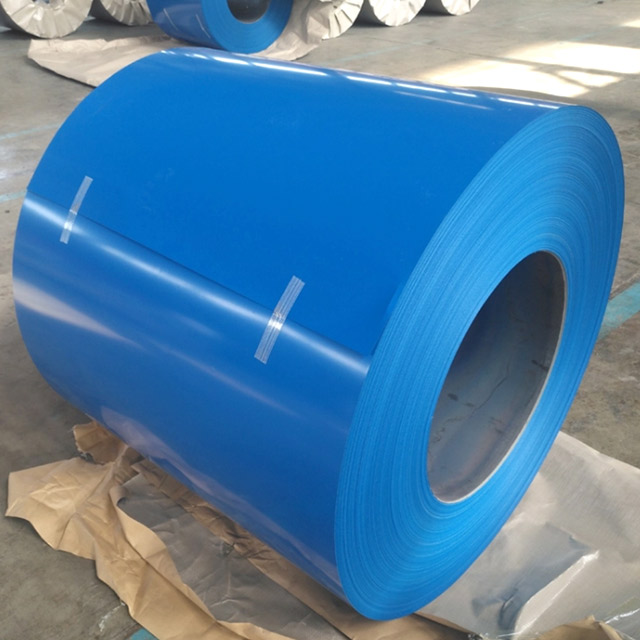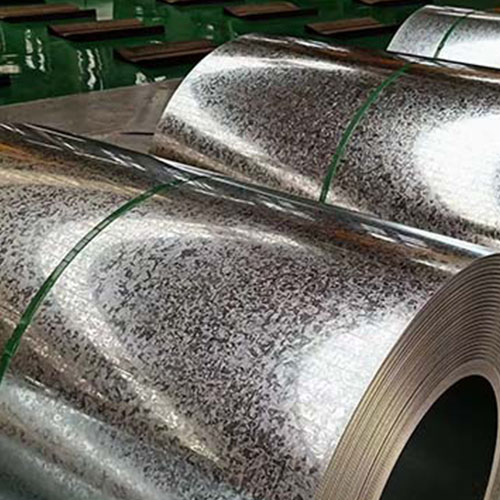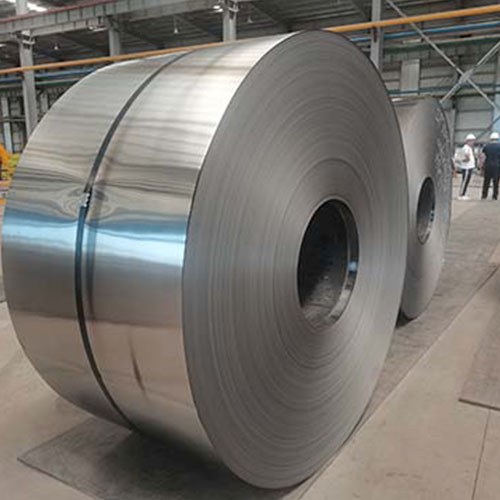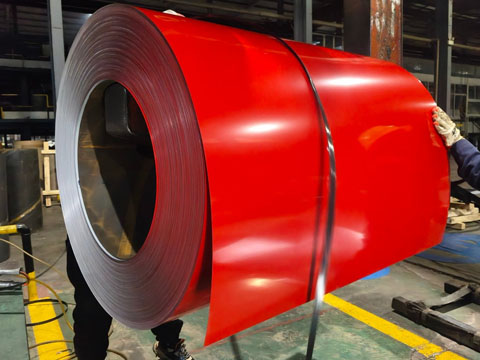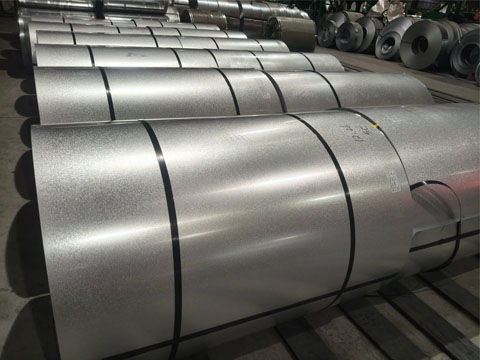

Hot-dipped galvanized steel is a type of corrosion-resistant steel in which a protective zinc layer is formed on the steel surface through a continuous hot-dip galvanizing process. It offers excellent corrosion resistance, along with good workability and cost-effectiveness, making it widely used in building structures, home appliance manufacturing, automotive parts, HVAC equipment, agricultural facilities, and industrial equipment manufacturing.
What Is Hot-Dipped Galvanized Steel?
Hot-dipped galvanized steel (HDG Steel) is a metal corrosion protection process in which steel, after surface treatment, is immersed in molten zinc to form a bonded layer between the zinc and the steel substrate.
In essence, hot-dip galvanized steel consists of a steel substrate and a hot-dip galvanized coating. For example, DX51D+Z275, where DX51D represents the steel grade, which has good cold-forming properties; Z275 represents a zinc coating weight of 275 g/m².
Hot-Dip Galvanized Steel Grades
| Standard | Grade | Features | Applications |
| EN10346 | DX51D | The most versatile cold-forming steel | Suitable for simple bending, folding, and light stamping; not suitable for complex deep drawing. The base material is low-carbon steel with moderate strength. |
| DX52D ~ DX57D | The higher the number, the better the deep-drawing performance | Suitable for manufacturing more complex stamped parts. | |
| SXXXGD (e.g., S250GD, S350GD) | Structural steel grade; the number represents the minimum yield strength (e.g., S350GD). | Primarily used for load-bearing structural components. | |
| JIS G3302 | SGCC | Commercial Quality | Its applications highly overlap with the DX51D, making it a common choice in home appliances, light steel structures, and general hardware. |
Which industries are suitable for using DX51D?
DX51D offers excellent overall performance and cost advantages, making it widely used in applications such as:
- General machinery and structural engineering: e.g., ventilation ducts, air conditioning systems, and cable trays.
- Home appliances and electrical equipment: components that do not require complex stamping, such as switchgear, appliance housings, and steel furniture.
- Building Materials: As a substrate for color-coated steel, used in roofing and wall systems.
Which industries are suitable for using SGCC?
SGCC is a commercial-grade steel under the Japanese standards system, and its industry applications are essentially the same as those of DX51D. For example:
- Home appliance manufacturing: side panels for refrigerators and washing machines, air conditioner casings, etc.
- Light industry and construction: file cabinets, shelving, light-gauge steel structural envelope components (roof panels, wall panels), etc.
- Automotive components: Non-structural, non-load-bearing parts such as interior body panels and chassis accessories.
SGCC can also serve as the base material for laminated metal coils; for example, SGCC laminated steel coils are produced using SGCC as the base material.
Zinc Coating Explained
Principle of Galvanizing
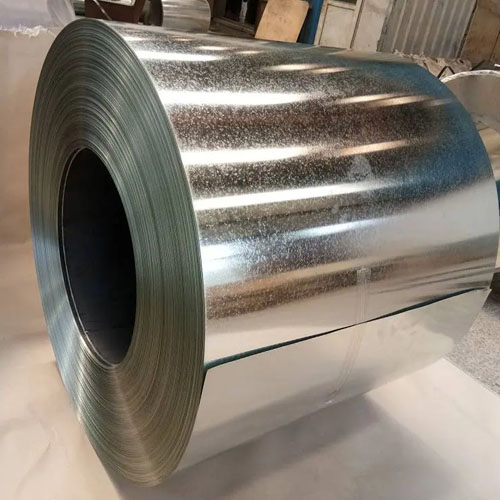
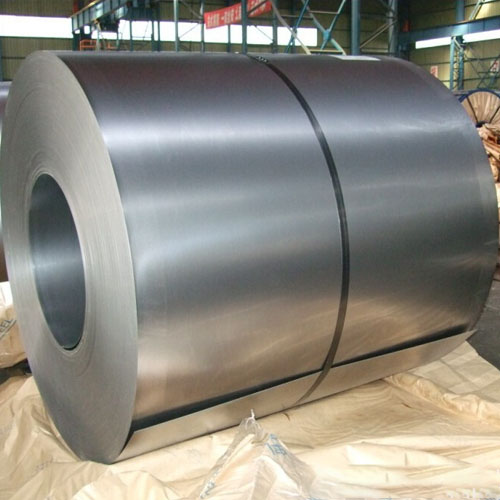
The zinc coating is applied through a metallurgical reaction. When steel is immersed in molten zinc at high temperatures, iron and zinc diffuse into each other, forming a coating composed of a zinc-iron alloy layer and an outer layer of pure zinc. The zinc coating thickness for hot-dip galvanized steel ranges from Z30 to Z275 g/m².
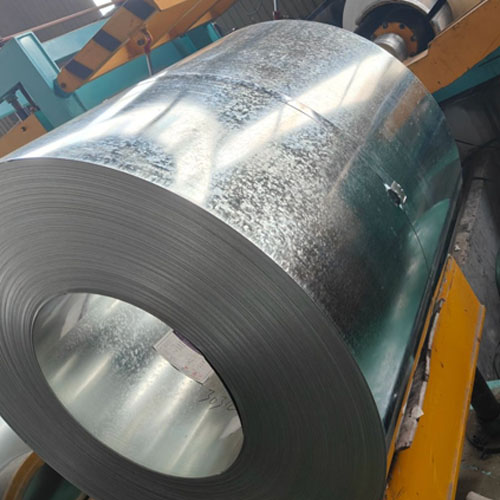
Zinc Flower Patterns
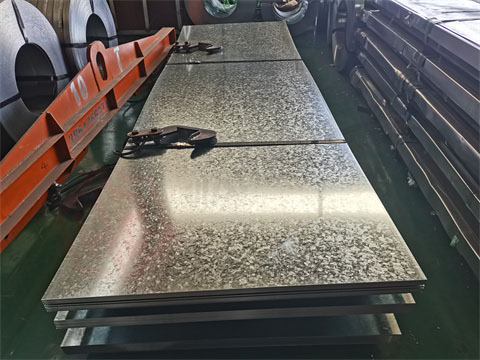
After hot-dip galvanizing cools, the pure zinc layer crystallizes to form a unique zinc flower texture. Zinc flower types include large zinc flowers, standard zinc flowers, small zinc flowers, and no zinc flowers.
Guide to Selecting Galvanized Coatings
| Zinc coating | Common Applications | Features |
| Z60-Z100 | Indoor equipment, internal structural components, general machined parts | Suitable for dry environments with low corrosion risk |
| Z120-Z180 | General buildings, roofing components, wall systems, industrial equipment, appliance back panels | A good balance between corrosion resistance and cost |
| Z275 | Outdoor buildings, roofing systems, agricultural facilities, building envelopes | Provides stronger corrosion protection, suitable for long-term outdoor use |
Summary: When selecting a galvanized coating, one should not focus solely on the coating weight but must also consider the following factors:
- Operating environment
- Expected service life
- Processing methods (stamping, bending, roll forming)
- Whether pre-painting is required
- Cost requirements
What are the Advantages of hot-dip galvanized steel?
- Long-term corrosion protection: The zinc coating provides barrier protection and acts as a sacrificial anode, effectively isolating the material from corrosive media.
- Excellent formability: With high ductility, it is suitable for various cold-forming processes such as bending, stamping, and roll forming.
- Wide Range of Substrate Options: Supports various substrates, including European standards (DX51D–DX57D), Japanese standards (SGCC–SGCE), and structural steel (S series), allowing for flexible material selection based on specific strength, forming, and corrosion resistance requirements.
- Low Maintenance Costs: The coating offers excellent durability, remaining maintenance-free for many years under normal conditions, significantly reducing the frequency and costs of maintenance during subsequent use.
- Suitable for a Wide Range of Environments: By adjusting the coating weight and substrate type, it can meet application requirements ranging from dry indoor environments to highly corrosive outdoor environments such as coastal and industrial areas.
These are the advantages of hot-dip galvanized steel sheet. Although hot-dip galvanized steel sheet has many advantages, you must also pay attention to maintenance and choose the right specifications according to the specific requirements.
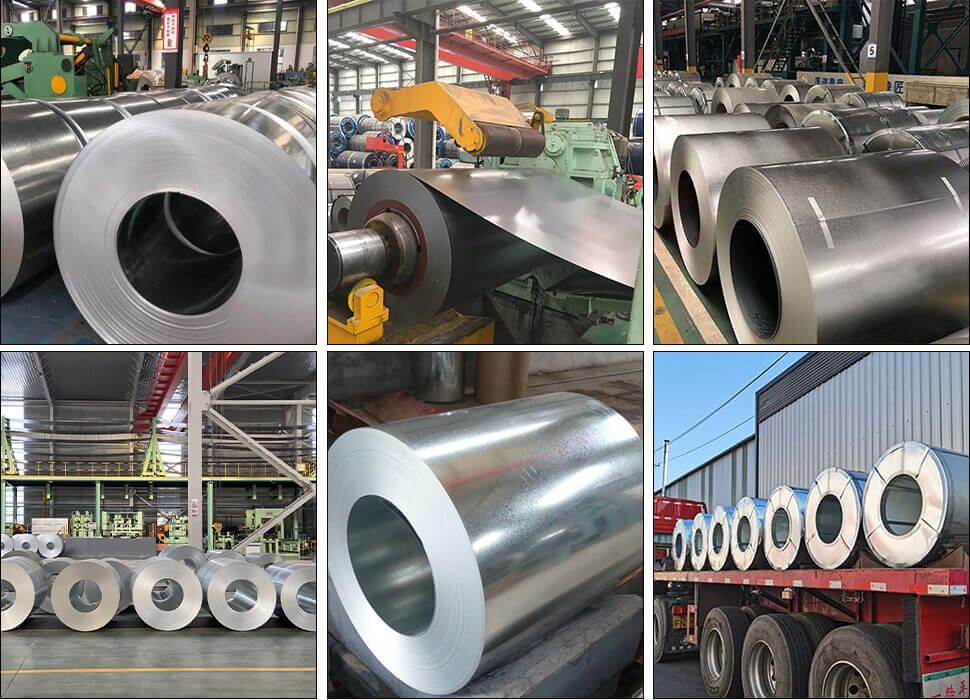
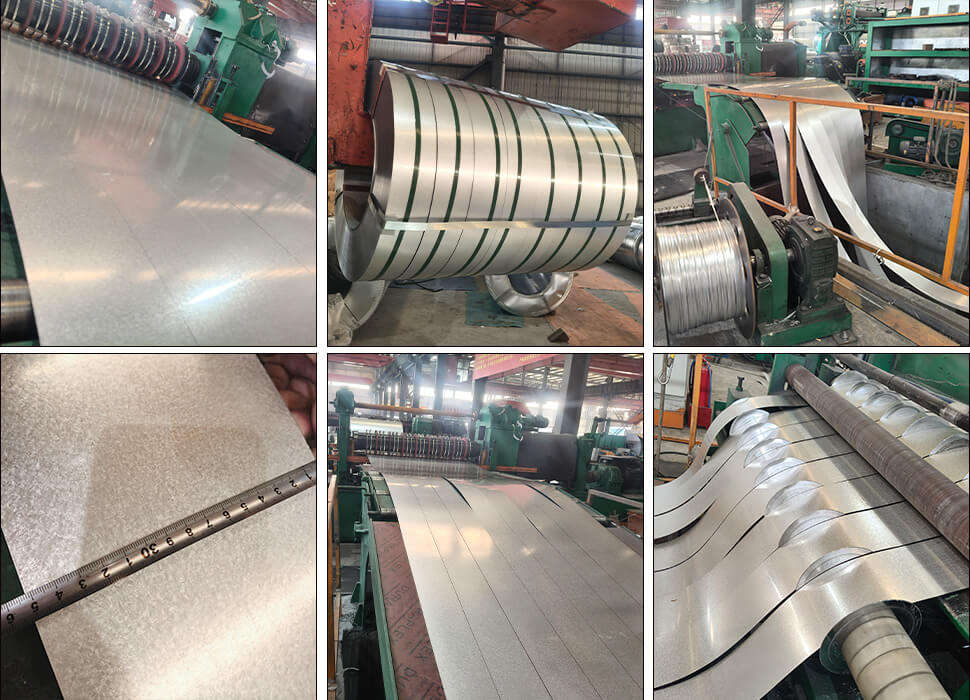
What is hot-dip galvanized steel used for?
- Construction: Roof panels, wall panels, steel structural frames, purlins, building furring strips, etc.
- Home Appliances: Refrigerator side panels/back panels, washing machine components, air conditioner front and rear panels, etc. For more details, please visit the “Galvanized Steel for Home Appliances” page.
- Automotive Industry: Body parts, seat frames, chassis structural components, crash beams, etc.
- HVAC Industry: Manufacturing central air conditioning duct systems, ventilation ducts, silencer housings, etc.
- Industrial Equipment: Electrical control cabinets, power distribution enclosures, machine guards, conveyor system supports, and warehouse shelving, etc.
- Agriculture: Greenhouse frames, livestock fencing and shed structures, irrigation equipment supports, grain storage facilities, and ventilation systems, etc.
Hot Dip Galvanized Steel vs Electro Galvanized Steel
| Comparison Items | Hot Dipped Galvanized Steel(HDG) | Electro Galvanized Steel(EDG) |
| Coating Method | Hot dip process | Electro plating |
| Zinc Thickness | Thick, double-sided up to 30-275g/m² | Thin, typically 10-30 g/m² |
| Surface and Appearance | Surface may have zinc bloom, resulting in a darker and relatively rougher appearance. | Bright, smooth surface, more aesthetically pleasing |
| Corrosion Resistance | Excellent. Thick coating + zinc-iron alloy layer + cathodic protection. | Generally speaking, the thin coating has significantly lower corrosion resistance than hot-dip galvanizing, making it more suitable for dry indoor environments. |
| Processing Performance | The coating is strong and wear-resistant, but the thick coating may be limited in complex stamping processes; the forming grade must be selected according to the grade. | Processability is higher than hot-dip galvanized steel. |
| Production Cost | Lower. Highly efficient process, suitable for large-scale production of thick-coated products. | The process is complex, consumes more electricity, and is significantly more expensive than hot-dip galvanizing. |
Therefore, when choosing galvanized steel coils and sheets, unless the appearance requirements are particularly strict, it is recommended that you choose hot-dip galvanized steel products. They not only have strong corrosion resistance but are also less expensive than electro-galvanized steel. For more details on the differences, please see this page: https://wanzhi-steel.com/the-difference-between-hot-dip-galvanized-steel-and-electro-galvanized-steel/
Hot-Dip Galvanizing Steel Manufacturing Process
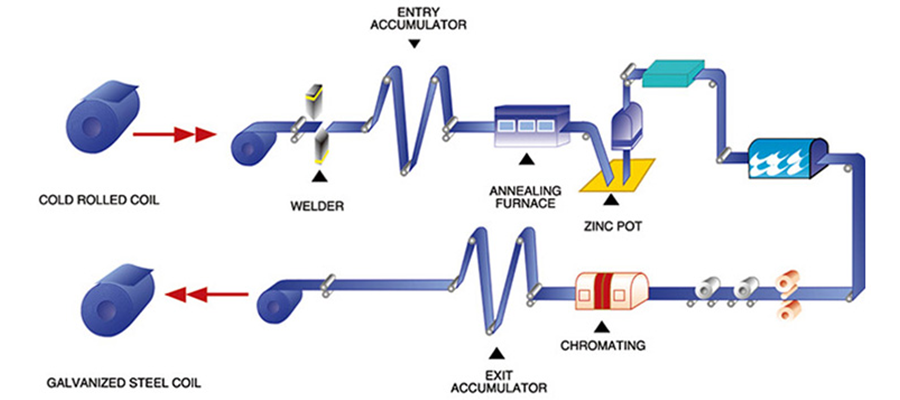
- Pretreatment: Oil and impurities are removed from the surface of the raw steel coils through degreasing, water washing, acid pickling, and other processes.
- Annealing: This step applies only to continuous hot-dip galvanizing lines. Its purpose is to restore the plasticity of the cold-rolled steel strip and prepare a “clean” reactive surface for galvanizing.
- Galvanizing: The steel strip is immersed in molten zinc at high temperature for hot-dip galvanizing.
- Control of Zinc Coating Weight: Immediately after being lifted from the molten zinc bath, excess zinc is scraped off using high-speed jets of compressed air or nitrogen (air knife), precisely controlling the coating thickness to achieve different grades such as Z100 to Z600.
- Cooling: After galvanizing, the steel is cooled to room temperature via an air or water cooling system. During cooling, the coating surface crystallizes to form the characteristic zinc bloom.
- Post-Treatment: To enhance resistance to white rust or to prepare for subsequent coating applications, galvanized steel coils undergo treatments such as passivation, pickling, and phosphating before leaving the factory. Please consult us to determine which surface treatment is most suitable for your needs.
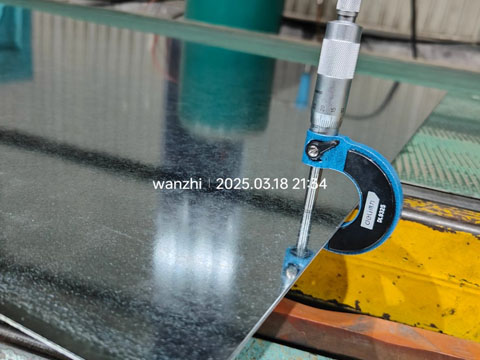
- Inspection: Final inspection is critical. We typically test the finished galvanized steel coils for zinc coating thickness, corrosion resistance, adhesion, mechanical properties, and surface quality to ensure the product fully meets customer requirements.
What is the difference between hot dip galvanizing and spray painting?
The surface treatment methods of hot-dip galvanizing and spray painting are different, so the effects are different in many aspects.
- Service life
In general environment, hot-dip galvanizing has excellent anti-corrosion performance and can keep rust-free for about 30 years. Spray painting can generally only be used for 3-5 years. In areas with large climate changes, it can only be used for 1-2 years. - Construction difficulty
Hot-dip galvanizing can be installed and operated directly on site without additional protective measures and is simple to construct. Spray painting is affected by many factors such as the operator’s technical proficiency, paint viscosity, working air pressure, distance between the spray gun and the object, and is also affected by weather, so the construction is difficult. - Appearance
The zinc layer of hot-dip galvanizing has good covering ability, dense coating, no organic inclusions, and high appearance quality. The corrosion resistance of spray paint is not ideal and it is easy to peel off, affecting the appearance. - Principle
Hot-dip galvanizing is the reaction of molten metal with an iron matrix to form an alloy layer. The substrate and coating are tightly combined, and the zinc layer is strong and corrosion-resistant. Spraying uses a spray gun and a disc atomizer to disperse the paint into uniform and fine droplets, which are applied to the surface of the object to be coated and baked at high temperature to form.
To sum up, there are obvious differences between hot-dip galvanizing and spray painting in terms of principle, anti-corrosion life, construction convenience, appearance, etc. There are specific considerations to consider when choosing which method to use.
How thick is hot dip galvanizing?
The thickness standard of hot-dip galvanizing is related to the thickness of the plated parts.
| Thickness of plated parts | Hot-dip galvanizing average thickness | Hot-dip galvanizing local thickness |
| ≥6mm | >85μm | >70μm |
| 3-6mm | >70μm | >55μm |
| 1.5-3mm | >55μm | >45μm |
According to the national standard《GB/T 13912-2002 Technical Requirements for Metal Covering and Steel Coatings》, the thickness of the galvanized layer of hot-dip galvanized steel pipes must be above 35 μm. In practical applications, the thickness of hot-dip galvanizing steel products is generally above 45 μm, and can even reach 200 μm.
Note that the thickness of hot-dip galvanizing is not as thick as possible. An excessively thick zinc layer may affect its service life.
FAQ about Hot-Dip Galvanized Steel
What is the service life of hot-dip galvanized steel?
Hot-dip galvanized steel can last 10 to 20 years without rusting. The specific service life is related to the actual environment, zinc layer thickness, use, zinc layer quality, etc.
Is a thicker zinc coating always better?
Not necessarily—it depends mainly on your intended application. If your subsequent processing requires deeper operations, such as stamping, a thicker zinc coating may crack during the stamping process, leading to reduced corrosion resistance. Additionally, if you plan to apply paint, a surface with an excessively thick zinc coating tends to be somewhat rough, which can result in poor paint adhesion.
Are there any other methods of galvanizing?
There is also electro-galvanizing, also called cold galvanizing, which does not require high-temperature treatment. After pretreatment, electrolysis is mainly used. The electroplated part serves as the cathode and the zinc solution serves as the anode. After energization, the zinc ions in the galvanizing solution move toward the cathode under the action of potential difference, forming a uniform zinc layer.
Can hot-dip galvanized steel be welded?
The answer is yes. It can be welded. Generally, electric welding or gas shielded welding can be used for thinner zinc layers, and argon arc welding with electrodes is recommended for thicker zinc layers. Gas shielded welding is mainly used for welding that is inconvenient to grind and has a zinc layer.
Can Hot-dip Galvanized Steel be Colored?
Hot-dip galvanized steel can be colored. It is coated by roller coating, then cured at high temperature and cooled to make pre-painted galvanized steel. There are many colors and types (PE, SMP, HDP, PVDF) of organic coatings to choose from.
What Galvanizing Process Is Used At WanZhi?
Galvanizing is a popular manufacturing method, mainly divided into hot dip galvanizing and cold galvanizing, cold galvanizing is also called electro galvanizing, electro galvanizing is also divided into acid plating and alkalinity.
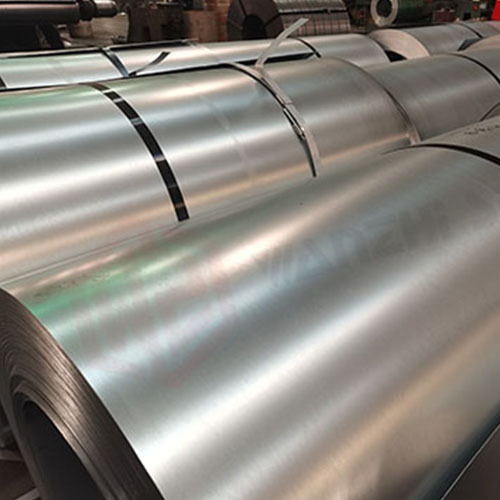
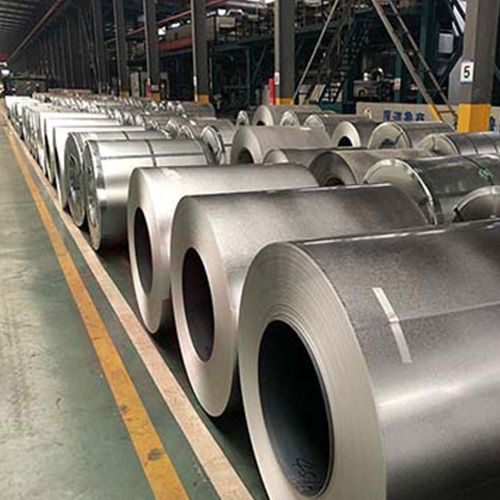
Wanzhi Steel Group adopts hot-dip galvanizing and electro-galvanizing processes, and has two hot-dip galvanizing production lines and one electro-galvanizing production line.
Conclusion
Hot Dipped Galvanized Steel involves placing iron into molten zinc, which causes a layer of zinc to adhere to the surface of the plated part. It is used to protect 80% of the world’s manufacturing industry against rust. Galvanization optimizes the performance of the plated parts and greatly improves the durability of GI steel products, and the Hot Dipped Galvanisation process is the most commonly used method of galvanization.
If you have a project in hand that requires this material, come and visit our production line, galvanized coils and sheets for sale!