


Steel for Writing Boards · Direct OEM Supply
Steel for Writing Boards
Our pre-painted steel coils for whiteboards, greenboards, grid boards, and blackboards—available in coil or pre-cut sheet form.
Production Process → Uncoiling of the substrate, pretreatment, primer, topcoat, backcoat, followed by slitting or cutting to the desired length. Visit our factory
Our Products Advantages
Does the pen glide smoothly? Are the lines clear? Can you see them clearly from the back of the room? And does the eraser leave any residue? The answers to all four of these questions depend on the coating—not the steel underneath. In the following tests of our whiteboard steel coil samples, you can clearly see the quality of our products.
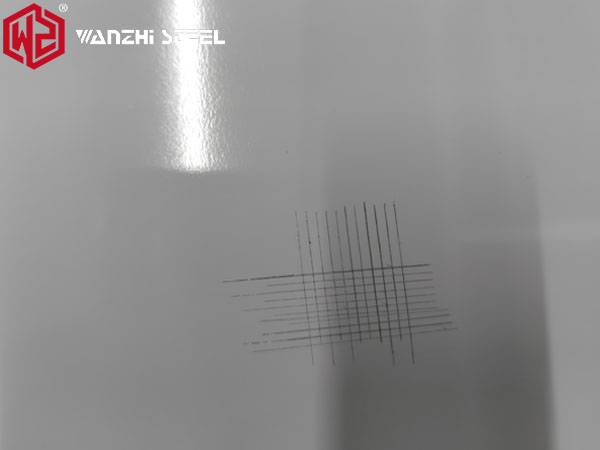
Cross-cut lattice, then a tape pull
Cut a 1-millimeter grid into the topcoat, then peel it off using tape. A Grade 0–1 paint film will remain in place after curing; it is clear that our coating has not peeled off at all.
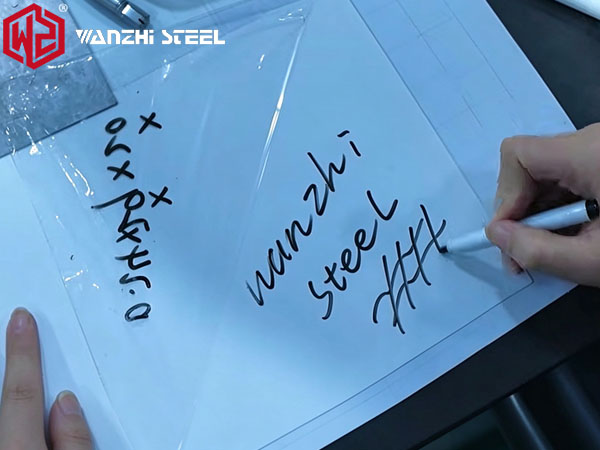
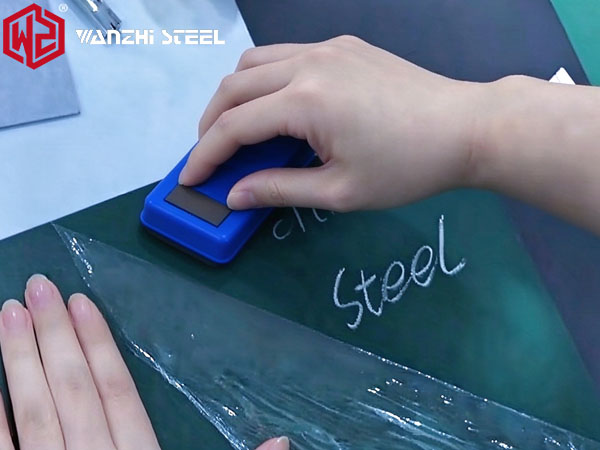
Marker down, eraser across
Apply a whiteboard marker or chalk to the finished surface, then wipe it clean in one go. Our writing boards steel coil wipe clean neatly, leaving no gray residue after writing.
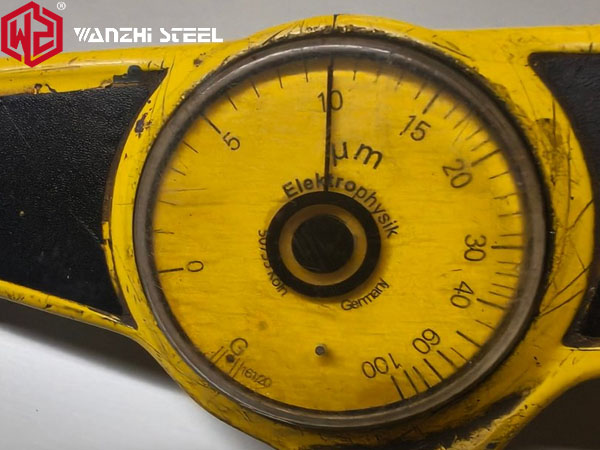
Line spacing measured after the clear coat
Writing on and erasing from white graph paper will not affect the grid lines. Our spacing specifications are precise, and custom sizes are available.
Choose the Right Writing Board Roll for You
Our writing board rolls come in four finishes—white, green, black, and grid—and you can choose the gloss level and coating system.
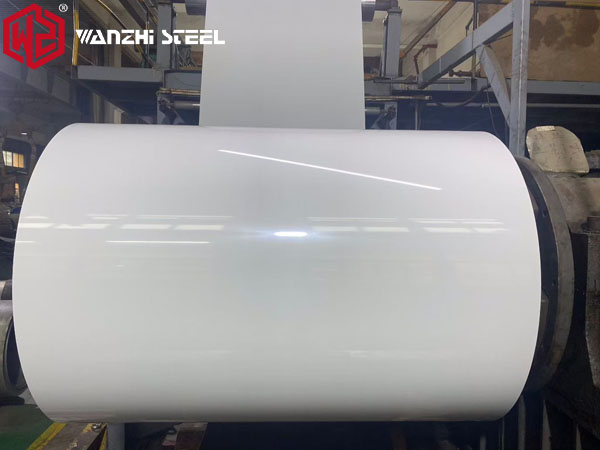
Grid chalkboard steel coil
A neutral white base for dry-erase marker, built on cold-rolled, galvanized or Galvalume substrate. Gloss is the design decision here: standard gloss for a bright board, matte for rooms with strong side light.
| Thickness | 0.09 – 1.0 mm |
| Width | ≤ 1300 mm |
| Substrate | CR / GI (Z30–Z275) / GL (AZ30–AZ150) |
| Topcoat | 15–25 μm |
| Surface | Gloss, matte, wrinkle · RAL 9001–9018 range |
| Write / erase | ≥ 50,000 scrub cycles (whiteboard line) |
| Best for | Classrooms, meeting rooms, clinic and ward boards |
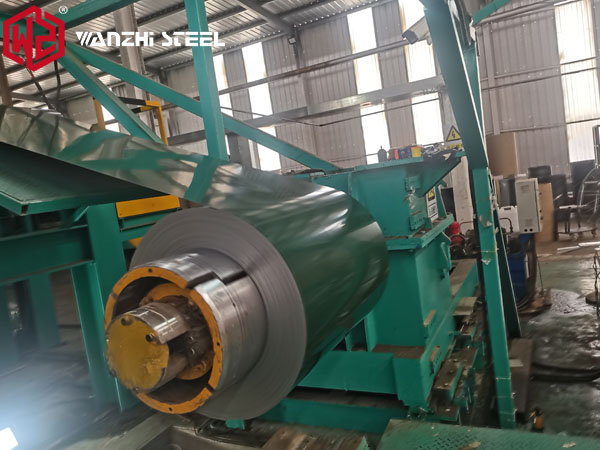
Green chalkboard steel coil
A chalk-grade resin over galvanized steel, deliberately flattened to a matte finish so the board can be read at an angle. The two usual shades are RAL 6016 and RAL 6029 — same coating structure.
| Thickness | 0.09 – 0.10 mm typical; available to 1.0 mm |
| Width / sheet | ≤ 1300 mm · cut length ≤ 1300 mm |
| Substrate | SGCC, DX51D, DX52D · zinc 30–275 g/m² |
| Topcoat | Chalk-grade resin or polyester · 15–25 μm |
| Gloss | Matte, anti-glare, typically ≤ 15 GU |
| Write / erase | ≥ 50,000 cycles, no ghosting after wipe |
| Best for | School boards, training rooms, wall-mounted boards |
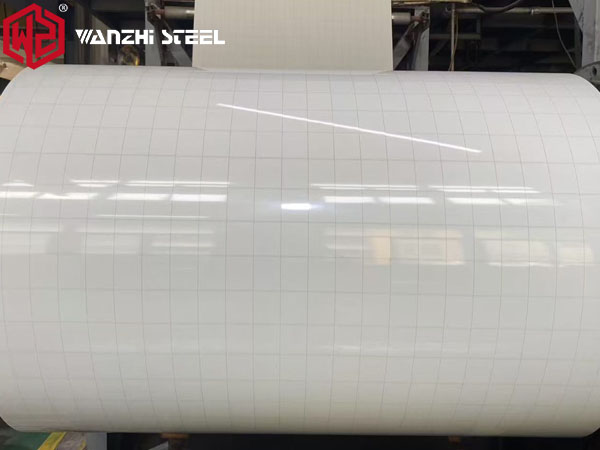
Grid chalkboard steel coil
A functional coating with the grid printed onto the topcoat and then sealed under a clear coat. The line pitch, the line colour and the base colour are all ordered, not improvised.
| Structure | Steel + primer + topcoat + grid print + clear coat |
| Grid pitch | 50 × 50, 20 × 20, 12.5 × 12.5 mm, or none |
| Combinations | White base / black lines · green base / white lines · black base / white lines |
| Thickness | 0.09 – 1.0 mm |
| Width | ≤ 1300 mm, coil or cut sheet |
| Best for | Maths and handwriting practice, planning boards, laboratory walls |
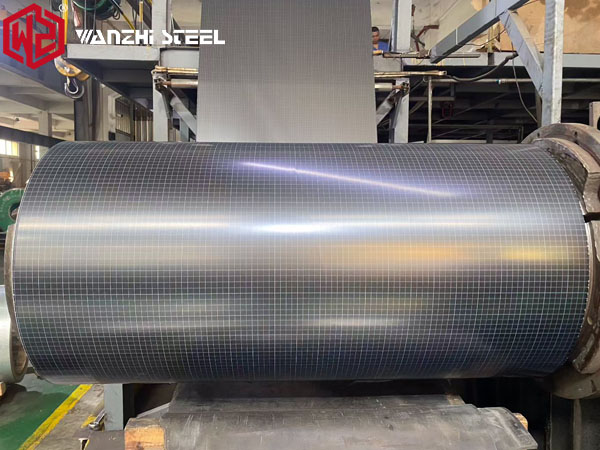
Blackboard Steel Coil
The same base structure as the green board, in a black topcoat. It works as a chalk surface in studios and canteens, and just as often as a decorative panel where a board has to disappear into the wall.
| Thickness | 0.09 – 1.0 mm |
| Width | ≤ 1300 mm |
| Finish | Gloss or matte black · optional white grid |
| Topcoat | 15 – 25 μm, PE or polyester |
| Write / erase | ≥ 50,000 cycles on the writing-board line |
| Best for | Menus and signage, design studios, feature walls |
Visit Our Factory
A comprehensive showcase of our production line’s operation, from the production of rolls to the shearing of the rolls into flat sheets.
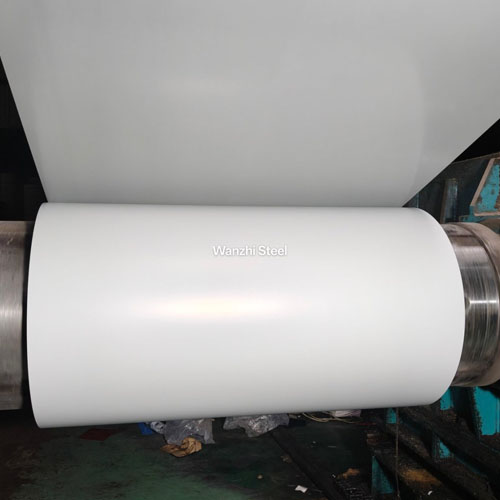
Coil
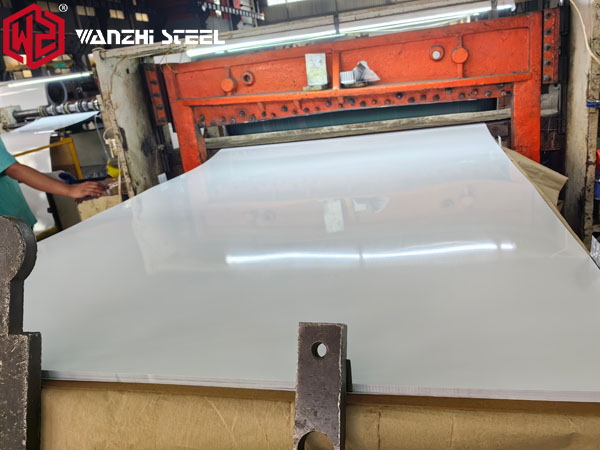
Cutting into sheets
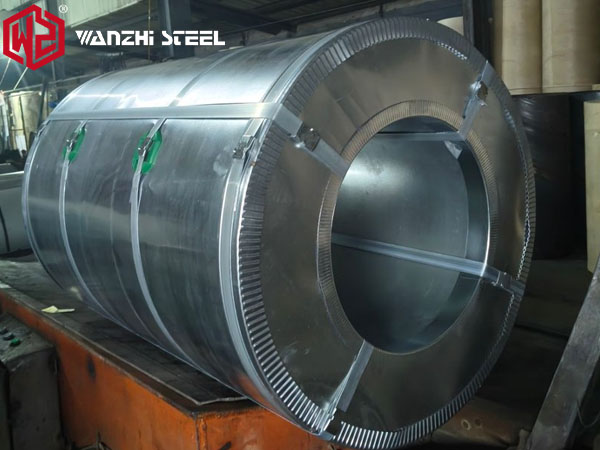
Coil Packing
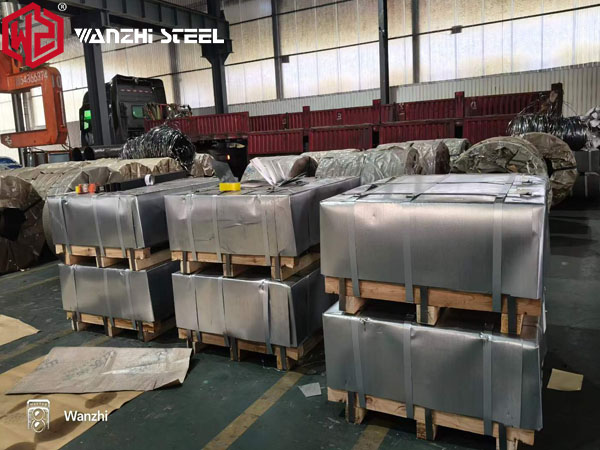
Sheets Packing
Quality control
We have a rigorous testing process (we fully support third-party testing, such as SGS). The following are the tests that our steel coils for writing boards must pass before shipment.
| Test Item | Test Method | Acceptance Criteria |
|---|---|---|
| Pencil hardness | Scratch test across the coated face after full cure | ≥ 3H |
| Coating adhesion | Cross-cut and peel on a 1 mm lattice | Grade 0 – 1 |
| Salt spray | Neutral salt spray, scribed and unscribed panels | ≥ 72 h, no red rust |
| Solvent resistance | Repeated rub with solvent-loaded cloth | ≥ 100 cycles |
| Gloss | 60° gloss meter against the approved standard | Matte ≤ 15 GU |
| Colour match | Spectrophotometer against the retained standard | ΔE controlled |
| Write / erase | Marker or chalk written and wiped on the finished surface | No ghosting |
| Abrasion | Repeated wiping to check for film loss or base exposure | ≥ 50,000 cycles |

Third-party testing results from SGS
- Report IN-SC-5801-17003
- IssuerSGS Inspection Report, non-negotiable
- OrderContract WZ2019CY1119-01, 19 Nov 2019
- SiteBoxing County, Binzhou, Shandong
- GoodsWhite writing steel, coil and cut sheet, chromium-oxide coated
- sheets drawn from three coils, inspected with the protective film on: no rust, no scratch, no blister, and the white sat on the buyer’s approved sample. Accepted. →Page 300
- sheets measured at a 0.18 mm and a 0.20 mm requirement. Every reading landed inside the ±0.01 mm band. →Page 45
- sheets written on with the buyer’s own markers and erased by the inspector on site. The ink lifted in one pass with no colour left on the plate. Accepted. →Page 45
Inspection report · 15 pages · 1.1 MB · PDF
FAQ
We will answer these questions before you place an order, not after. The following are questions that are asked in almost all inquiries about writing plates.
Both. Standard supply is coil at 508 or 610 mm ID, 2.5–3 t for the chalk and grid series, 3–5 t for the whiteboard series. We also slit to width ≤ 1300 mm, cut to length ≤ 1300 mm, and process sheets or punched blanks. Cut sheet is the better choice if your laminating line cannot handle coil handling.
6016 is the bluer, lighter turquoise green and reads as the classic school board under fluorescent light. 6029 is greener and deeper, holds colour better in warm light, and looks more contemporary on a large wall. Order a physical sample of both if the room has feature lighting.
Yes, if the substrate is galvanized or Galvalume. Zinc coating on steel keeps the magnetic pull, which is why most school boards use GI rather than cold-rolled base. If you order cold-rolled substrate for a lower cost, plan for a non-magnetic board.
Yes. You can send us the dimensions you need for customization. Standard pitches are 50 × 50, 20 × 20 and 12.5 × 12.5 mm, with black lines on white base, white lines on green base, or white lines on black base. The grid is printed after the topcoat and sealed under a clear coat.
The minimum order quantity is 5 tons. Delivery time for standard specifications is usually 10-20 days after contract signing. Quotations for customized colors and mesh panels will be determined on a case-by-case basis.