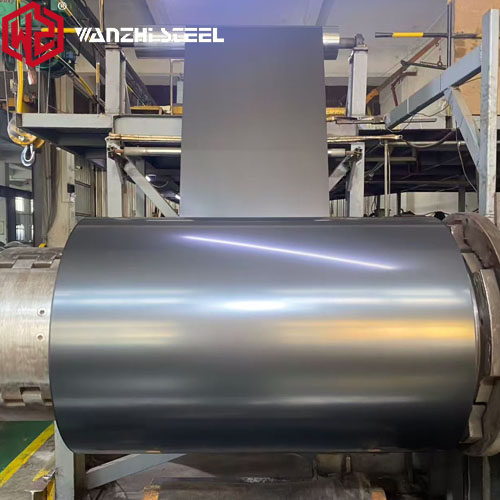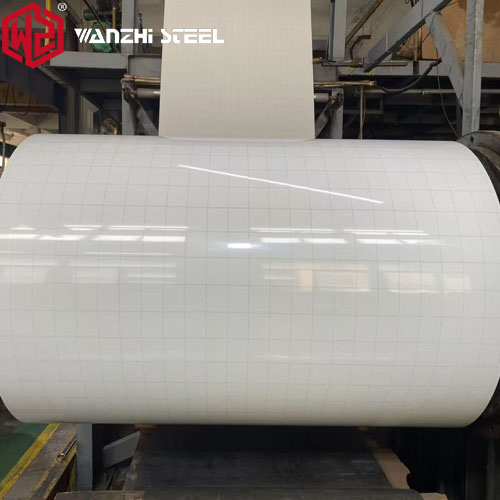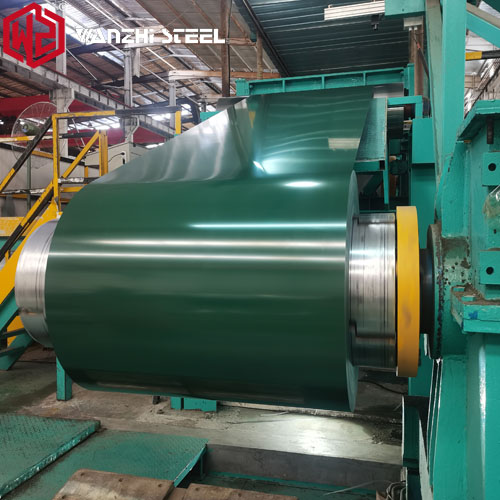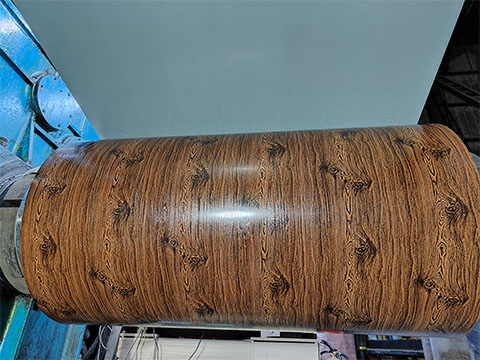

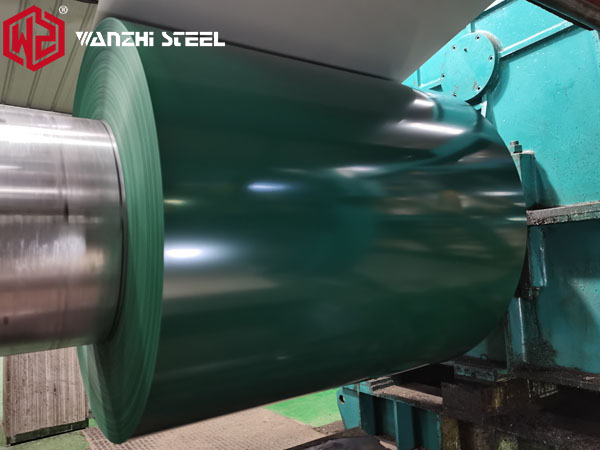
For our Russian customers, a writing board steel coil is not just an ordinary color-coated steel sheet; it must simultaneously meet three requirements on a single coil of material: the surface must remain flat after cutting and framing; it must allow for smooth writing and easy erasure; and the protective film must withstand several dozen days of ocean transport as well as loading and unloading at temperatures in the low -20s.
Dear Russian customers, regarding your procurement of whiteboard steel coils—how to select the substrate, paint, and protective film; what thickness the substrate should be; what coating system and thickness to choose; and what grade of protective film to use—this article will provide all the answers.
Substrate Selection
How to Choose Substrate Thickness
Since whiteboards are hung on walls or mounted on mobile stands and are subject to almost no stress themselves, it’s easy to conclude that “increasing the thickness only adds to the cost.” In reality, thickness addresses another issue with whiteboards: panel shape. When thin panels are cut into 1200×2400 strips and framed, the edges tend to warp and the diagonals tend to curl; when viewed directly against the light, this appears as a layer of ripples. This defect cannot be flattened by framing alone. The larger the panel size, the thicker the material should be selected.
| Substrate Thickness | Typical Board Sizes | Why choose this grade? |
| 0.15–0.18mm | Small sizes up to 600×900 mm, children’s boards, portable boards | Lowest cost, lighter cutting, cheaper transportation. |
| 0.20–0.25mm | Regular teaching boards and office boards from 900×1200 to 1200×2400 mm | A balance between flatness and rigidity, the mainstream production grade. |
| 0.28–0.35mm | Large sizes above 1200×2400 mm, mobile stand boards, splicing boards | Resistant to deformation, no collapse or wobbling after framing, reducing the need for joists. |
| 0.40–0.50mm | Blackboards, greenboards, extra-large sizes and special structures | Best rigidity, suitable for heavy loads and large areas. |
Why use a Whiteboard-Specific Substrate?
The requirements for the writing surface of the substrate are completely different from those for architectural color-coated steel sheets:
- There must be no raised zinc bloom. Where zinc bloom is present, the paint film thickness is uneven; this causes the pen tip to “stutter” when writing and makes it easy to leave shallow scratches when erasing, resulting in a finished product that appears uneven.
- Free of oil, particles, and inclusions. If the substrate is oily, the paint film will develop craters and pinholes; even a single speck of dust trapped under the paint will create a raised spot, rendering the entire roll suitable only for downgraded processing.
- Must be magnetic. End-user whiteboards require the attachment of magnetic particles, magnetic strips, and magnetic document pouches; aluminum sheets and some laminated steel sheets are not magnetic. Our galvanized steel coil substrate is magnetic.
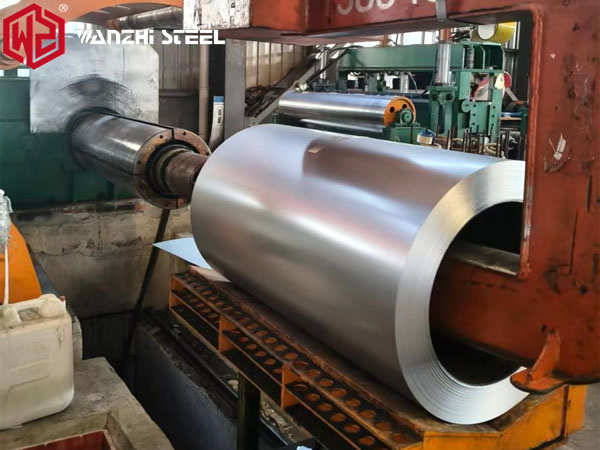
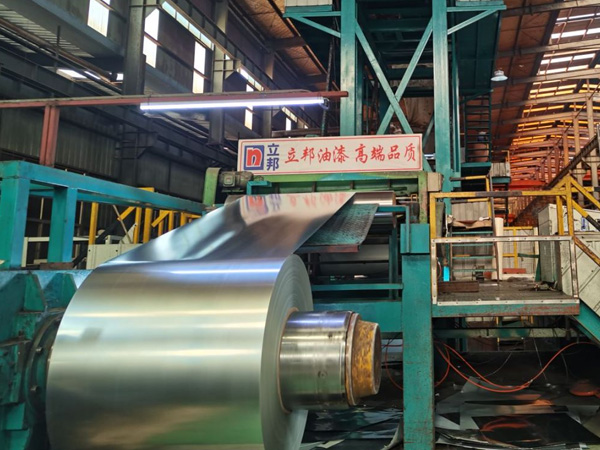
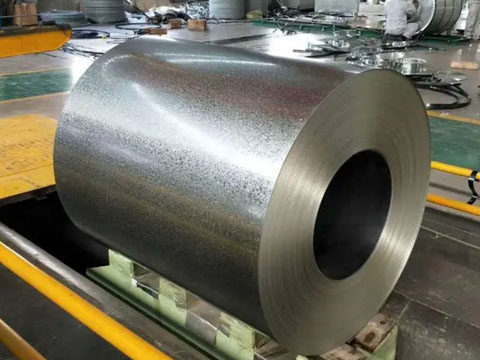
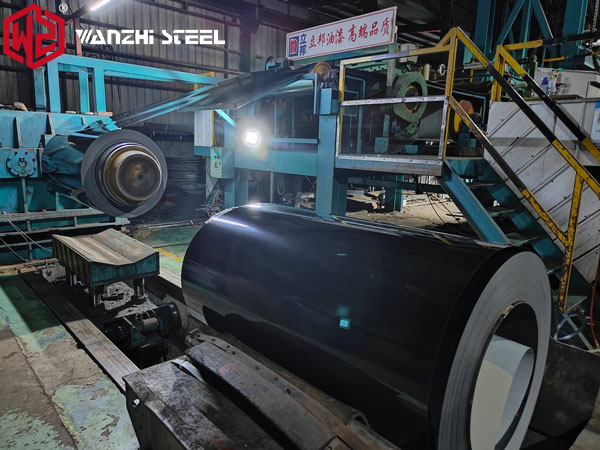
Writing steel plate substrate
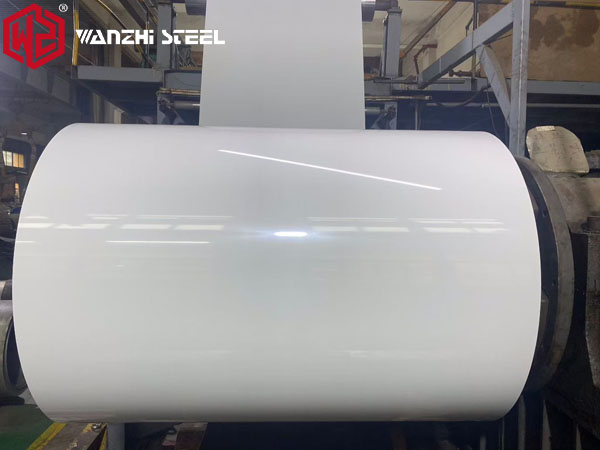
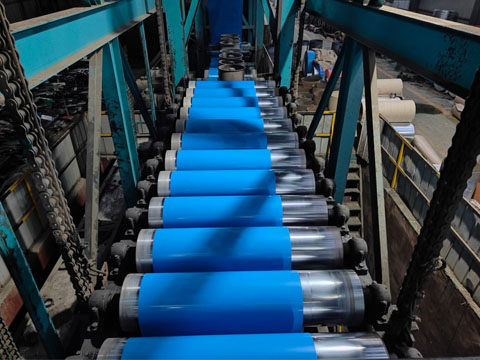
White steel coils for writing boards completed
How to select the zinc layer for the substrate
The number after Z indicates the minimum total zinc layer weight for both sides, in g/m², calculated according to GB/T 2518 or JIS G3302, not for one side. Writing Z120 means the total zinc layer weight for both sides is not less than 120 g/m².
| Zinc Coating Designation | Total for Both Sides | Applicable Scenarios |
| Z60–Z80 | 60–80g/m² | Dry indoor environments, short-distance transit |
| Z120 | 120g/m² | Russia’s most popular substrate zinc coating |
| Z180–Z275 | 180–275g/m² | Siberia and the Far East, wintering in port yards, transit without heated warehouses, long-term exposure after cutting |
Guide to Choosing Topcoats
Four-Layer Structure
Before we discuss how to choose the right coating, let’s first take a look at the four-layer structure of a paint film. Starting from the substrate, there are at least four layers, each with a different thickness and function.
| Layers | Typical dry film thickness | Functions |
| Pretreatment (roughening or chromium-free passivation) | Extremely thin | Provides adhesion and initial corrosion protection |
| Primer | 5–8 μm | Adhesion, corrosion protection, and filling of microscopic unevenness in the substrate |
| Topcoat | 10–25μm | Writing, erasing, solvent resistance, and stain resistance (special topcoat for writing steel plates) |
| Backcoat | 5–8μm | Prevents adhesive penetration and backside rust prevention |
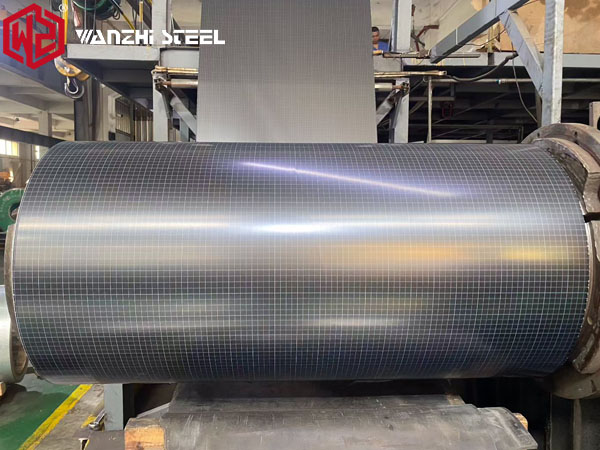
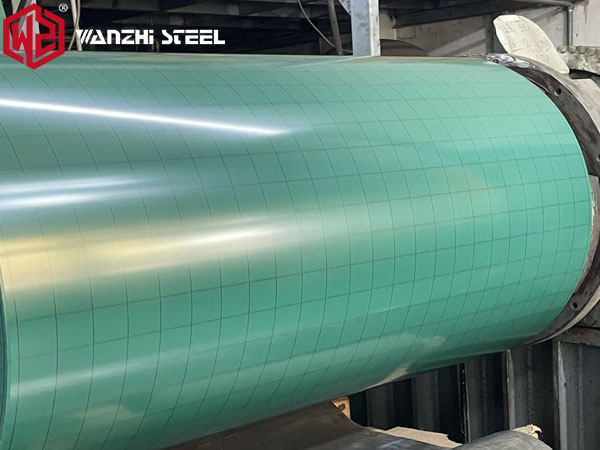
Topcoat Systems
Three topcoat systems are available; select the one based on the intended level of use.
| System | Pencil Hardness | Solvent Resistance and Erasability | Cost | Suitable Board Types |
| Epoxy Whiteboard Paint | 2H–3H | Strong adhesion, good solvent resistance, and consistent erasability | Medium | Mid-range educational boards and office boards—the best value for the money |
| UV-Curable Acrylic | 4H–6H | Best smudge resistance, smoothest writing, and best solvent resistance | High | Classroom boards for frequent writing and high-end office boards |
| Standard Polyester | F–HB | Solvent resistance and erasability are one level lower | Low | Low-frequency use, promotional models, and temporary display boards |
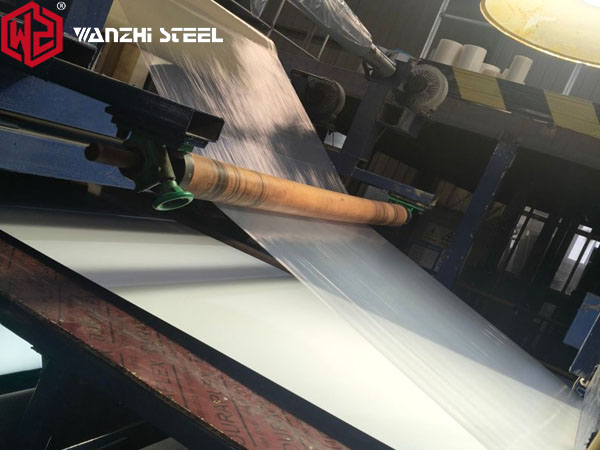
Protective Film
When it comes to PE and PVC, higher adhesion isn’t always better. Films with adhesion exceeding 400 g/25 mm are likely to peel off with paint when stored in a 40°C shipping container for a month; conversely, if adhesion is too low, the film will curl and attract dust during ocean transport, and the edges will fray by the time the customer cuts the board.
For exports to Russia, the most reliable ranges are: 200–300 g/25 mm for low-temperature-grade PVC and 150–250 g/25 mm for low-temperature-grade PE. The specific low-temperature resistance grade should then be confirmed based on the month of shipment.

| Type | Thickness | 180° Peel Strength | Advantages | Risks |
| PE film | 40–70 μm | 100–300 g/25 mm | Low cost, easy to peel, little adhesive residue | Moderate conformability; edges lift and pick up dust on long sea voyages |
| PVC film | 60–100 μm | 200–400 g/25 mm | Strong bonding; can be printed with logo and grid lines | High tack may bond to the coating inside a hot container |
| Low-temperature grade (PE or PVC base) | Follows the base film: PE 40–70 / PVC 60–100 μm | Same range as the base film, mid-to-high end: PE 150–250 / PVC 200–300 g/25 mm | Stays flexible at -20 °C / -30 °C and peels cleanly in winter | One price grade higher; must be specified in the order |
Conclusion
When selecting steel coils for Russian whiteboards, the three most important factors are: substrate thickness, paint film thickness, and whether the film can withstand freezing temperatures.
- Thickness by board type — Whiteboards: approximately 0.2 mm; blackboards and greenboards: 0.3–0.4 mm; inner diameter: 508 mm.
- Coating specifications by system: epoxy paint specifically for whiteboards, with a gloss level of 90+; topcoat 15–25 μm; and backcoat 5–15 μm.
- Protective film specifications by season: select a low-temperature-resistant grade and remove it within 3 months.
When evaluating incoming shipments, focus primarily on the three criteria listed above. The remaining parameters can be determined based on specific application requirements and budget.
Wanzhi Steel is a professional supplier of writing board steel coils in China. In addition to coils, we also supply pre-cut sheets. We not only export to the Russian market but also serve customers in Argentina, Indonesia, Kazakhstan, the Philippines, Thailand, and other countries. Please contact us for product details and pricing.