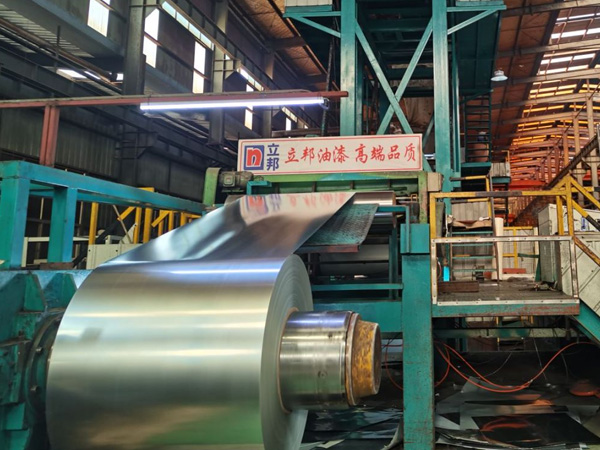

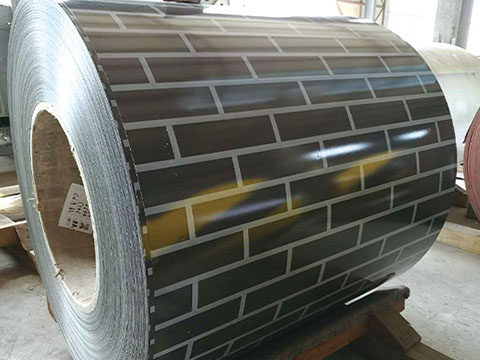
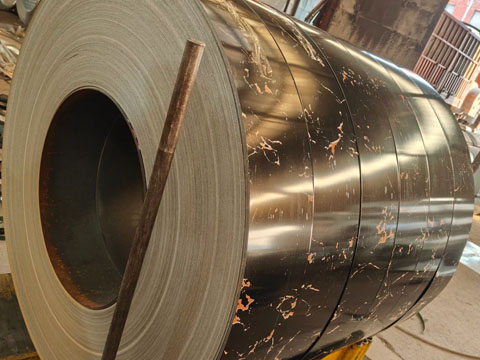
Within the color-coated steel coil product family, printed steel coils (Printed PPGI / PPGL) have become the material of choice for applications such as home appliances, building envelopes, ceilings, door panels, and container interiors, thanks to their rich decorative effects and high added value. Unlike standard color-coated steel sheets, printed steel coils utilize precision printing techniques to produce a variety of patterns, including wood grain, stone texture, camouflage, and brick patterns.
Today, we’ve prepared three topics on printed steel coils. Please join me in learning more about them.
- The Production Process of Printed Steel Coils
- Common Pattern Types
- 5 Questions Customers Often Ask
Core Production Processes for Printed Steel Coils
The production of printed steel coils typically relies on a color-coated steel production line (CCL), with the addition of a precision pattern printing process. The overall process (consisting of 6 key steps) is as follows:
Substrate Preparation
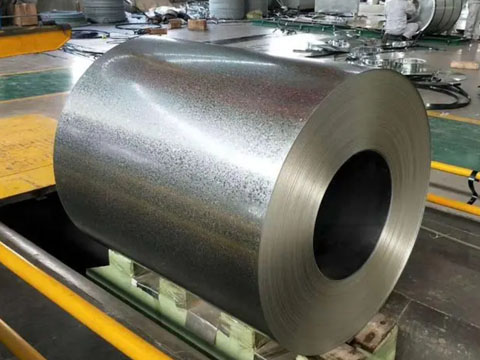
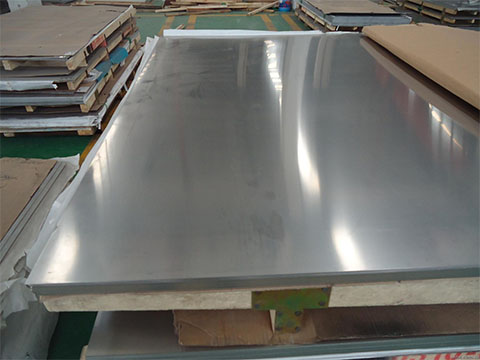
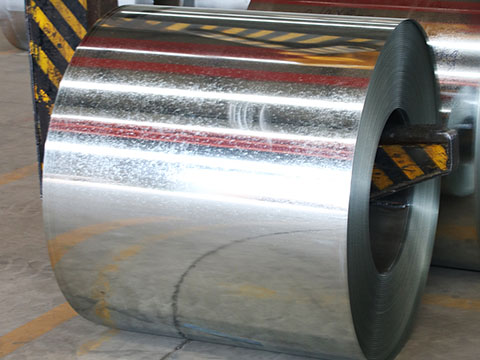
The first step in the production of printed steel coils is substrate preparation, which lays the foundation for the subsequent coating and printing processes. Depending on customer requirements and application scenarios, high-quality substrates must be selected, primarily including hot-dip galvanized steel coils (for PPGI) and hot-dip aluminum zinc steel coils (for PPGL).
Pre-treatment (Chemical Treatment)
This includes processes such as degreasing, cleaning, and surface conditioning. The purpose is to remove oil and oxides from the substrate surface and form a chemical conversion coating. This step is critical for determining coating adhesion and corrosion resistance. Inadequate pretreatment may lead to blistering or paint peeling in later stages.
Primer Application
A precision roller coating method is used to apply a uniform layer of primer, with a thickness controlled at approximately 5±1 μm. The primer primarily serves to provide corrosion protection and enhance adhesion; the baking temperature is typically set between 200–230°C.
Topcoat Application
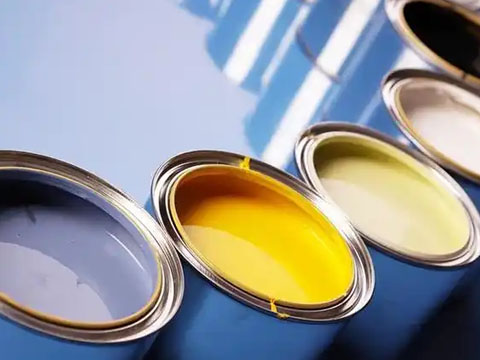
After the primer has cured, the process proceeds to the topcoat application stage. The quality of the topcoat directly determines the color saturation, weather resistance, and service life of the printed steel coil. The topcoat thickness can be adjusted according to customer requirements, typically ranging from 10–20 μm. Commonly used coatings include PE, HDP, and PVDF; these three types have distinct properties and can meet the needs of different application scenarios.
Pattern Printing (Core Process)
The most widely used method currently is rotogravure printing. Its principle is similar to paper printing, but due to the need to adapt to the hard surface of steel sheets, it requires higher precision. The specific process is as follows:
- Manufacture of engraved printing cylinders;
- Multi-color registration printing (typically 2–4 colors) to ensure perfect pattern alignment without color bleeding or ghosting;
- Precise layer-by-layer overlay of the pattern;
- In-line baking and curing.
The printed layer is extremely thin, typically not exceeding 1 μm (ink or polyester-based materials).
Process Structure Overview
Two Coats, Two Bakes
- Process: Primer → Printing → Clear Coat
- Features: Lower cost, shorter process, suitable for general decoration or interior panels of home appliances, with average weather resistance.
Three-Coat, Three-Bake
- Process: Primer → Topcoat → Printing → Clear Coat
- Features: Richer colors, superior weather resistance and corrosion resistance, high pattern stability; suitable for building exteriors, curtain walls, and high-end home appliances.
Technical Challenges
- Color registration accuracy control;
- Pattern clarity;
- Ink adhesion;
- Preventing color bleeding, ghosting, and pattern misalignment.
If not properly controlled, issues such as blurring, ghosting, and color discrepancies can easily arise. Our advanced production processes ensure that our customers’ products are free from these issues.
Topcoat
After printing is complete, a layer of transparent topcoat approximately 5–10 μm thick is applied to the surface. This serves to protect the printed design, improve scratch resistance, enhance gloss, and resist UV-induced aging. This step directly determines the outdoor service life of the printed board.
Pattern Types We Supply
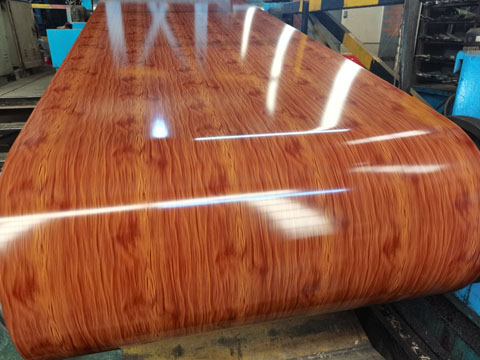
- Wood-grain steel (walnut, oak, teak, etc.): Suitable for door panels, railings, and decorative wall panels; in high demand in Southeast Asia and the Middle East.
- Stone-grain steel (marble, granite, concrete): Suitable for prefabricated buildings and exterior walls of commercial spaces.
- Brick-grain steel (red brick, cultural brick): Commonly found in African and South American markets.
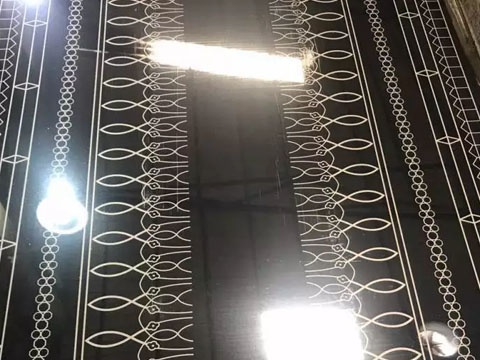
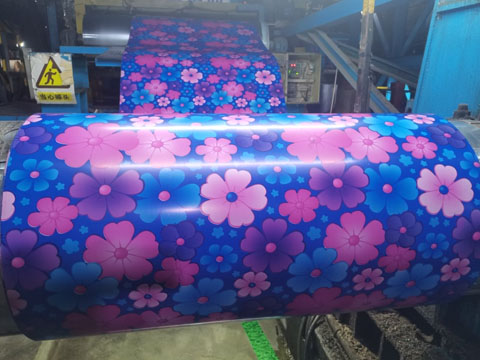
- Custom Patterns (Corporate Logos, Camouflage, Special Designs): A major advantage of printed steel coils is their ability to support small-batch customization and high-value-added designs.
Frequently Asked Questions
Q: What is the total coating thickness?
A: The standard configuration is 5 μm primer + 15 μm topcoat + 5 μm clear coat, for a total thickness of approximately 25 μm.
Q: What is the outdoor service life?
A: PE coating: approximately 3–5 years; HDP: approximately 8–10 years; PVDF: up to 15 years or more, depending on local climate conditions.
Q: Will the color fade?
A: In standard production, with clear coat protection and UV-resistant coatings, significant fading is unlikely.
Q: Will the pattern distort?
A: Pattern stability is guaranteed provided that tension, registration accuracy, and baking temperature are properly controlled.
Q: What is the minimum order quantity?
A: Standard patterns typically require ≥10 tons, while special patterns require ≥25 tons. Custom engraved rollers incur additional plate-making fees.
Summary
The production of printed steel coils (PPGI/PPGL) is a systematic and precise process that integrates six major stages: substrate preparation, pretreatment, primer coating, topcoat application, pattern printing, and clear coat application. Each stage is closely interrelated and influences the others. Strict control of process parameters—such as coating thickness, baking temperature, and printing accuracy—is key to ensuring product quality.
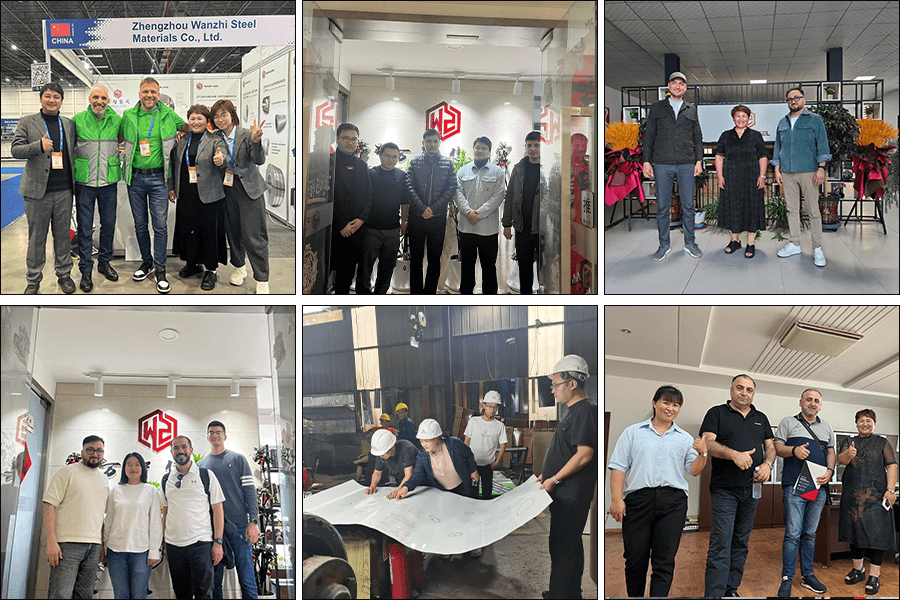
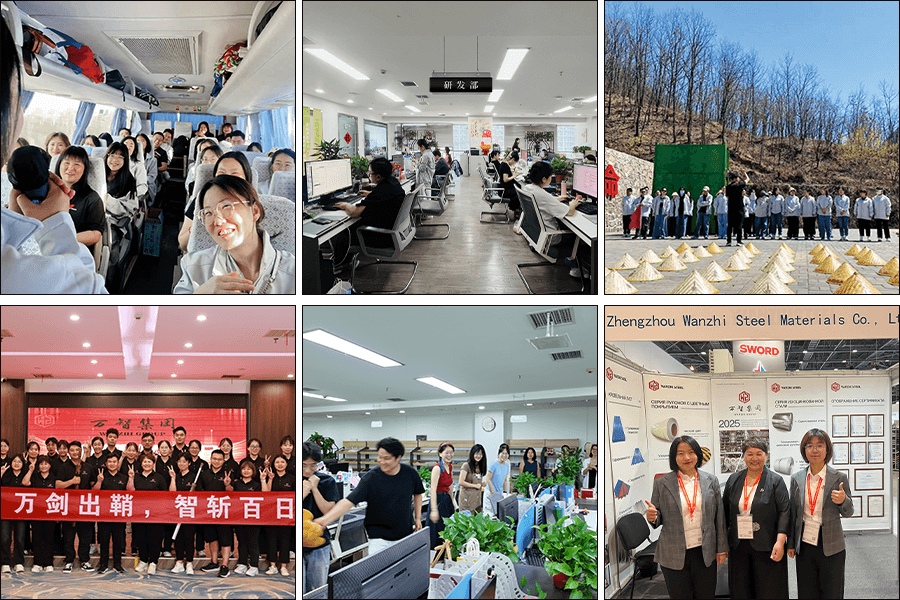
Wanzhi Steel is a professional manufacturer and supplier of printed steel coils with over 15 years of experience. Our products are exported to more than 120 countries and regions, including Russia, Vietnam, Myanmar, Thailand, Turkmenistan, Iran, Iraq, Saudi Arabia, Brazil, and Sweden.
We not only supply printed steel coils but also PPGI and PPGL steel coils. With a wide range of product types, we can meet your one-stop procurement needs. Please feel free to contact us with any inquiries.