
FAQ About GI, GL & ZAM
On this page, you can quickly find answers to questions about GI, GL and ZAM steel product specifications, selection, procurement process, logistics and transportation.
FAQ Categories
Need Help?

Amy Wang
Operations Manager
Product FAQ
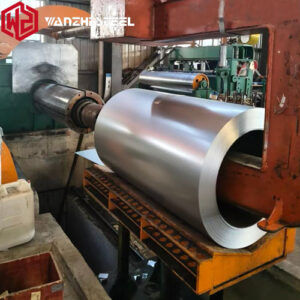
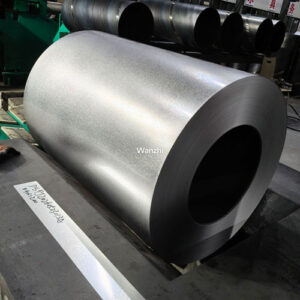
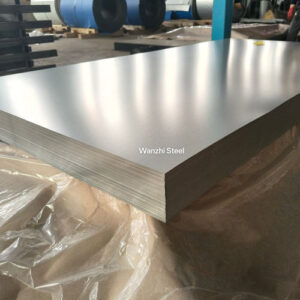
GI stands for Galvanized Steel. Our galvanized steel products include galvanized steel coils, sheets (flat sheets and corrugated sheets), pipes, and galvanized steel wire.
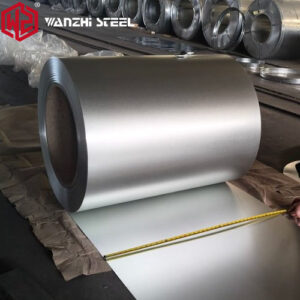
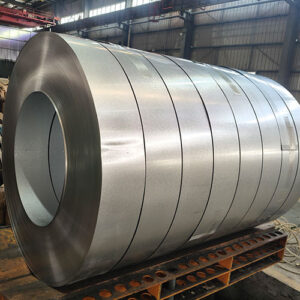
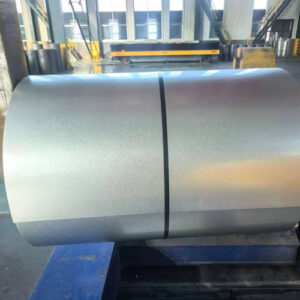
GL stands for Galvalume Steel. Our GL steel products include coils, sheets (flat sheets and corrugated sheets), and strips.
ZAM stands for Zinc-Aluminum-Magnesium steel. ZAM steel offers the highest corrosion resistance among the three products and is also available in coils, sheets, and strips.
GI Steel
Passivation (chromate treatment): Forms a conversion coating on the surface of the zinc layer, which not only enhances corrosion resistance but also improves the adhesion of subsequent coatings (such as paint).
Z275 is a high-zinc coating specification (275 g/m² on both sides, approximately 137.5 g/m² on one side). In neutral salt spray testing, it typically maintains 500–800 hours without white rust, corresponding to a corrosion resistance lifespan of 15–25 years in actual outdoor environments with moderate corrosion (non-coastal industrial areas).
Z80 (galvanized coating ≥ 80 g/m² on both sides) is recommended. According to GB 50243-2016, office buildings fall under the category of general ventilation systems, which require basic corrosion resistance to ensure a 15–20-year service life for the ducts, without the need to withstand high temperatures or ultra-clean environments. For smoke control systems or ultra-clean environments in hospitals, a higher zinc coating (≥120 g/m²) is required.
Yes. For the same coating thickness, the density of the aluminum-zinc alloy is 3.72 g/cm³, while that of zinc is 7.12 g/cm³; therefore, the coating thicknesses of both Z275 and AZ150 are approximately 40 μm.
White rust is a white corrosion that forms on galvanized steel coils in humid environments when the zinc coating reacts with water and carbon dioxide; it affects both appearance and corrosion resistance. The core causes fall into three categories:
Production processes (inappropriate electroplating solution formulation, substandard zinc coating, incomplete passivation, insufficient drying);
storage and transportation (damp conditions, poor ventilation, damaged packaging, exposure to rain or condensation);
customer usage (long-term outdoor storage, high-humidity and high-salinity environments).
No, it is not. The salt fog environment along the Caspian Sea coast requires a zinc coating of Z120 or higher (salt fog resistance with no white rust ≥ 150 hours). Z80 (≤ 100 hours) cannot withstand long-term salt fog corrosion; it is prone to extensive white rust within 6–8 months and will develop red rust within one year.
General ventilation (office buildings/shopping malls): We recommend Z80 galvanized steel sheet, 0.5–0.6 mm thick, which meets the basic requirements of GB 50243-2016 and has a service life of 15–20 years.
Fire Smoke Control Systems: We recommend galvanized steel sheet Z120 or higher, or 304 stainless steel (to withstand high-temperature flue gases and meet fire resistance requirements).
Hospital/Cleanroom Ventilation: We recommend 304 stainless steel or color-coated steel with an antimicrobial coating. Kitchen Grease Exhaust: 304 stainless steel is mandatory (due to severe corrosion from grease).
Electrogalvanizing: The coating is relatively thin, with a smooth, clean surface and good workability. It is primarily used for automotive exterior panels, home appliance panels, and precision machining.
Hot-dip galvanizing: Thicker coating; the surface may exhibit zinc bloom and is relatively rough; offers strong corrosion resistance and is suitable for outdoor applications, construction steel, steel structures, color-coated substrates, guardrails, and roofing.
For more details, please refer to this page → https://wanzhi-steel.com/the-difference-between-hot-dip-galvanized-steel-and-electro-galvanized-steel/
GL Steel
It primarily depends on the dense Al₂O₃ oxide film formed by the aluminum in the coating, which covers the coating surface and prevents corrosive agents from penetrating. This is the protective mechanism of the aluminum oxide film.
Approximately 60%–70%, which is significantly higher than that of galvanized steel sheets. It is suitable for building roofing applications that require thermal insulation and cooling.
AZ150 (150 g/m² double-sided aluminum-zinc alloy coating) is recommended for its balance of performance and cost. AZ200 offers greater corrosion resistance but is too expensive; Z60/Z100 are pure zinc coatings with lower corrosion resistance than the AZ series.
No. In acidic environments (pH < 7), the Al₂O₃ oxide film formed by aluminum is easily dissolved, leading to a loss of protection. In such cases, corrosion resistance is actually lower than that of galvanized steel sheets (zinc corrodes at a slower rate in acidic environments). Therefore, galvanized steel sheets are more suitable for acidic environments.
Weldability is poor. Due to the high aluminum content, a hard and brittle Fe-Al-Zn intermetallic compound layer tends to form during welding, resulting in poor weld quality, low strength, and a tendency to crack. Mechanical fastening methods such as riveting or bolting are generally recommended. (Galvanized steel sheets have good weldability.)
ZAM Steel
The key lies in the addition of magnesium (Mg), which forms denser, more stable composite corrosion products (such as the Simonite phase) with zinc and aluminum, effectively blocking the intrusion of corrosive media and significantly enhancing resistance to edge corrosion, particularly in harsh environments.
Due to the alloying effect, the microhardness of the zinc-aluminum-magnesium coating is higher than that of a pure zinc coating, offering superior wear and scratch resistance, making it less prone to damage during transportation, installation, and use.
In terms of upfront costs, the initial purchase price of ZAM steel is higher than that of ordinary galvanized steel, but it is significantly lower than that of stainless steel. In terms of total life-cycle costs, ZAM steel offers better value than galvanized steel. Which option is more cost-effective depends primarily on your specific application and operating environment. Please feel free to contact us, and we’ll recommend the product best suited for your needs.
Tin-plated sheets are commonly used in the manufacture of food cans and for soldering electronic components and circuit boards;
Chrome-plated sheets are commonly used in the manufacture of beverage cans (they offer significant advantages in terms of adhesion for packaging applications requiring a coating).
Both can be used in the electronics industry, but chrome-plated sheets are only used for non-core, non-conductive components.
Logistics and Transportation FAQ
Production typically begins after receiving a 30% deposit from the customer. The production lead time varies depending on the order quantity and ranges from 7 to 30 days.
EXE, FOB, CIF, etc.
This generally depends on the product specifications, coil weight, destination port, and shipping line requirements.
As a general rule, depending on the steel product, a 20GP container typically holds around 25 metric tons, while a 40GP container generally holds up to 28 metric tons. Longer steel products (12 meters) are typically loaded into 40GP containers.
For example, for a 5-metric-ton steel coil, a 20GP container can hold approximately 4–5 coils, with a total weight of about 20–25 metric tons. For an 8-metric-ton steel coil, a 20GP container can hold approximately 3 coils, with a total weight of about 24 metric tons.
We conduct rigorous inspections after production. If you require a third-party inspection, we fully support this and can assist with the arrangements; customers may also send their own inspectors to our factory. SGS is the third-party inspection agency most commonly used by our customers, and all our products have passed their inspections. Please refer to our SGS reports for details.