
FAQ about Corrugated Steel Sheets
On this page, you can quickly find answers to questions about corrugated steel sheets product specifications, selection, procurement process, logistics and transportation.
FAQ Categories
Need Help?

Amy Wang
Operations Manager
Corrugated Steel Sheets FAQs
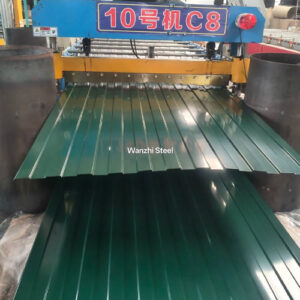
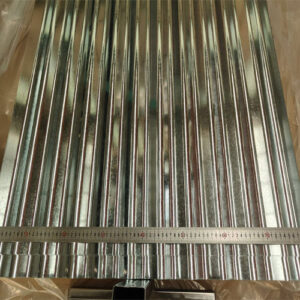
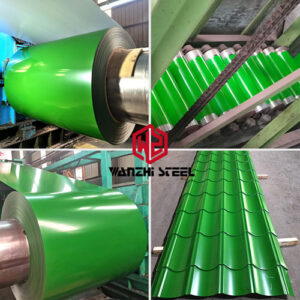
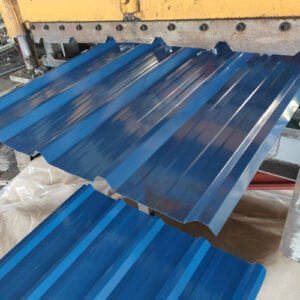
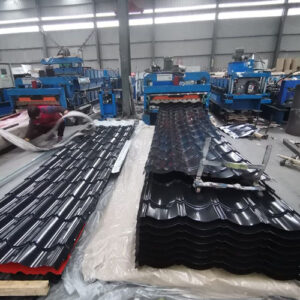
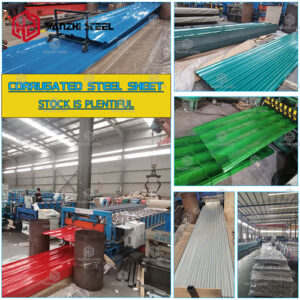
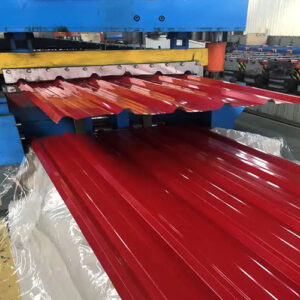
Thickness range: 0.2–0.8 mm
Effective widths: 680 mm, 760 mm, 820 mm, 900 mm, 950 mm, 960 mm, 1025 mm, etc.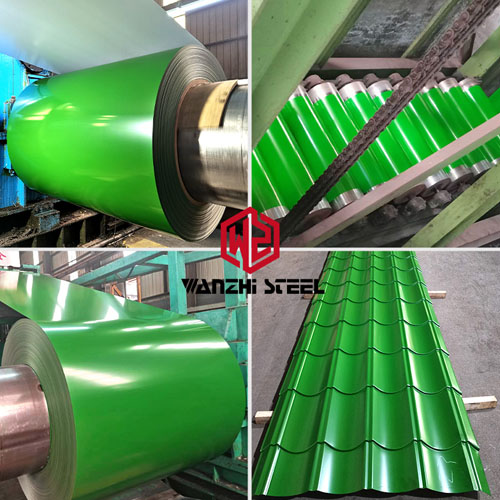
Price is influenced by thickness, corrugation profile, coating, and length.
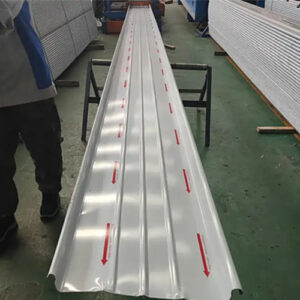
In export trade, the length of corrugated steel sheets determines the packaging length; the longer the package, the higher the price.
For domestic simple packaging, the impact is minimal, but length affects the choice of transport vehicles—larger vehicles incur higher freight costs. For all types of steel sheets (cold-rolled, galvanized, color-coated, and corrugated), longer lengths result in higher packaging costs.
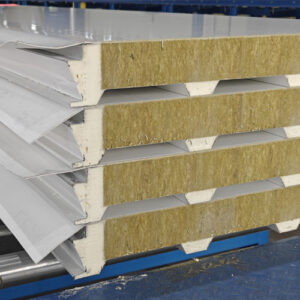
Polystyrene foam, rock wool, and polyurethane—of which polyurethane offers the best performance. The thickness of the color-coated steel sheets used to manufacture metal sandwich panels is 0.4–0.6 mm.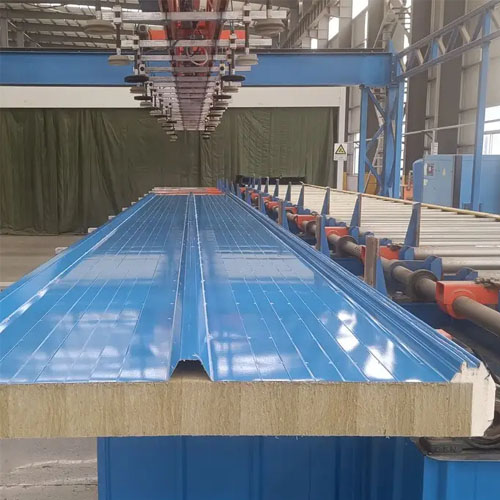
We recommend three solutions:
Option 1—light-colored, highly reflective PVDF-coated panels (white panels can achieve a reflectance of over 70%, reducing roof temperature by 10–15 degrees);
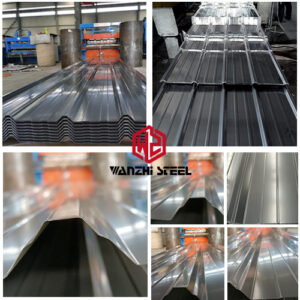
Option 2—aluminum-zinc-coated steel sheets (heat reflectance of 60%–70%, providing inherent thermal insulation);
Option 3—insulated sandwich panels (color-coated panels + polyurethane/rock wool core, offering the best thermal insulation).
If your budget allows, we recommend a combination of light-colored PVDF panels and 50mm polyurethane sandwich panels, which can reduce roof temperature by 20–30 degrees compared to standard color-coated panels and lower indoor temperature by 5–8 degrees.
We recommend PE color-coated sheets with a 0.4–0.5 mm galvanized steel substrate (Z80–Z120 zinc coating). This is the most cost-effective solution.
The PE coating ensures a service life of over 10 years in typical industrial environments, while the Z80 zinc coating provides basic corrosion protection. We recommend off-white or ocean blue (as these colors have a mature supply chain and offer the best value). If your budget allows, we suggest upgrading the roof to 0.5 mm thickness to withstand wind and snow loads.
I recommend PVDF-coated color-coated steel sheets with an AZ150 aluminum-zinc-coated or ZAM (zinc-aluminum-magnesium) substrate, with a thickness of 0.5–0.6 mm. PVDF coating maintains its color for 15–20 years, and aluminum-zinc-coated steel offers far superior resistance to salt spray corrosion compared to standard galvanized steel.
During installation, overlapping seams must be treated with weather-resistant sealant. If your budget allows, a zinc-aluminum-magnesium-coated substrate combined with a PVDF topcoat is the optimal combination.
We recommend PVDF-coated color-coated steel sheets with a 0.6–0.8 mm AZ150 aluminum-zinc-coated substrate. Since public buildings prioritize visual consistency, we suggest using sheets produced in the same batch for a single project to avoid color variations.
For large-span roofs, the thickness should be increased to 0.8–1.0 mm to ensure load-bearing capacity. Custom colors are available (subject to confirmation of MOQ and lead time). Fluorocarbon coatings offer uniform gloss and excellent self-cleaning properties, making them suitable for landmark buildings.
Logistics and Transportation FAQ
Typically, production begins after we receive a 30% deposit from the customer. The production lead time varies depending on the order quantity, but generally ranges from 7 to 30 days.
We fully support customers arranging for their own agents or third-party inspection agencies to conduct inspections at our factory. Generally, customers are responsible for contacting the inspection party themselves, and any costs incurred from the inspection are typically borne by the customer.
EXE, FOB, CIF, etc.
Rust-proof paper, plastic film, galvanized iron sheet wrapping the entire sheet + side guards + corner protectors – fixed circumferential radial straps.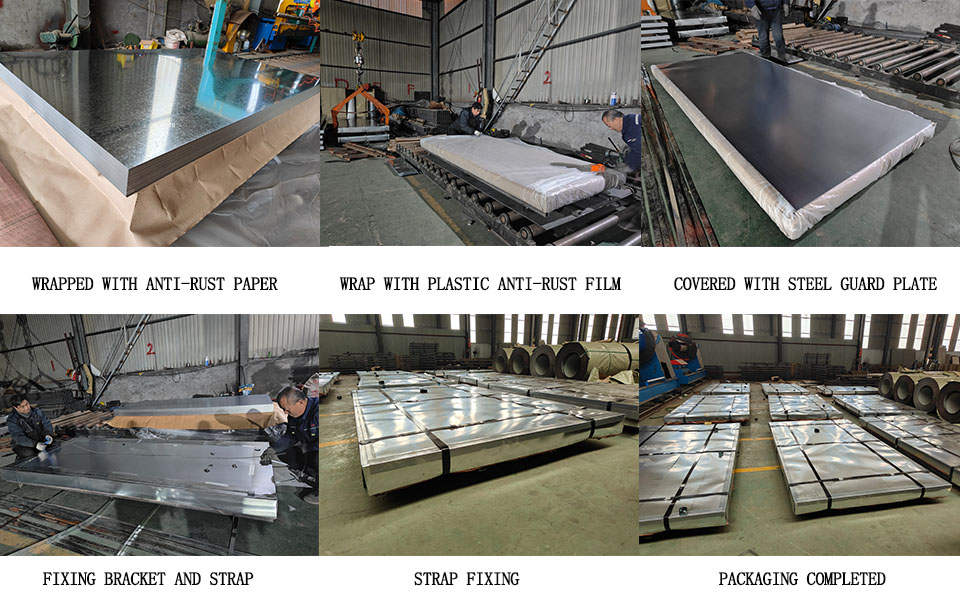
This generally depends on the product specifications, coil weight, port of destination, and carrier requirements.
Generally speaking, depending on the type of steel, a standard 20-foot container (20GP) can typically hold about 25 metric tons of steel, while a standard 40-foot container (40GP) can usually hold up to 28 metric tons. Longer steel products (12 meters) are typically loaded into standard 40-foot containers.
For example, for steel coils weighing 5 metric tons each, a 20-foot standard container can hold approximately 4–5 coils, for a total weight of about 20–25 metric tons. For steel coils weighing 8 metric tons each, a 20-foot standard container can hold approximately 3 coils, for a total weight of about 24 metric tons.
Bulk cargo (≥100 metric tons; bulk shipping is the most cost-effective), container shipping, rail car shipping, and LCL (less than container load) shipping (5–10 metric tons).
We conduct rigorous inspections after production. If you require a third-party inspection, we fully support this and can assist with the arrangements; customers may also send their own inspectors to our factory. SGS is the third-party inspection agency most commonly used by our customers, and all our products have passed their inspections. Please refer to our SGS reports for details.