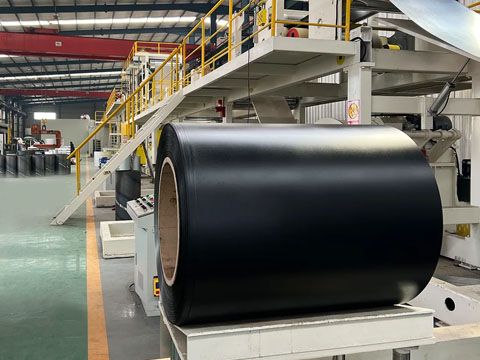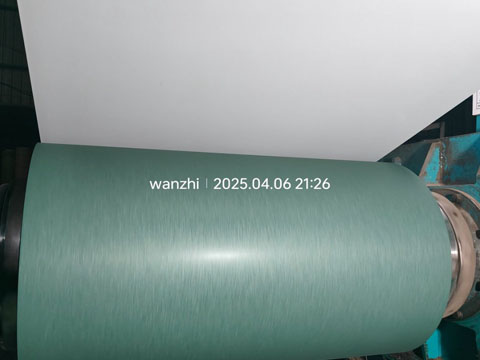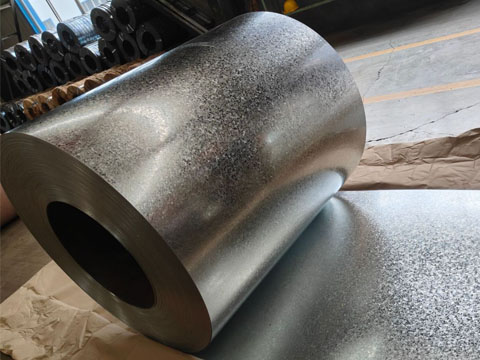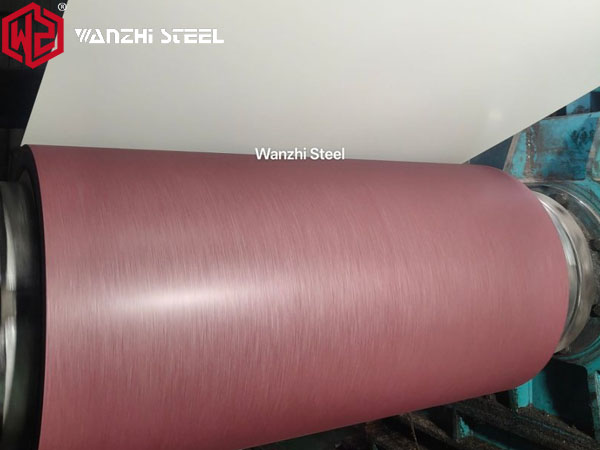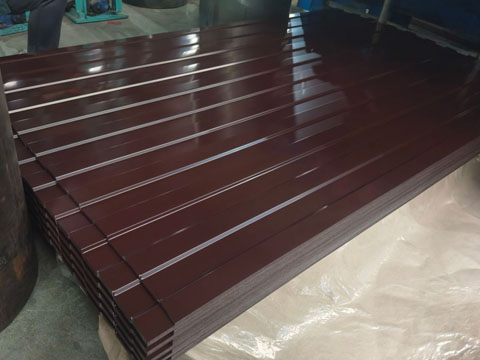

When purchasing PPGI coils (pre-painted steel coils), GI coils (galvanized steel coils), and GL coils (galvanized-aluminum steel coils), many buyers encounter a common issue: Why do the samples look good, but the actual shipment shows quality discrepancies? Common problems include:
- The sample color is excellent, but the actual shipment has color variations;
- The sample surface is smooth, but the bulk shipment has scratches or pitting;
- The sample’s performance meets requirements, but the actual service life falls short of expectations;
- The sample is approved, but a different substrate is used in mass production.
So the reason for quality discrepancies is simple: an excellent sample only proves that the supplier “can do it right once.” It does not prove whether the supplier:
- has stable production capacity;
- can consistently replicate the sample’s quality;
- or has established a sound quality management system.
A truly reliable steel coil supplier does not merely provide a qualified sample, but guarantees that every coil of steel is produced consistently in accordance with the contract specifications.
What Can a Sample Prove?
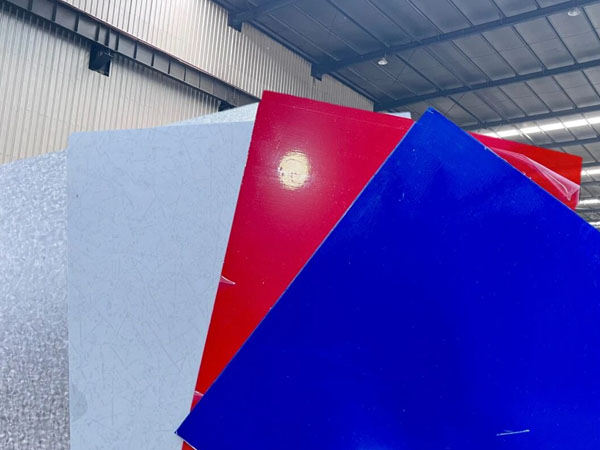
Many buyers fall into the misconception that as long as the sample is of good quality, the bulk order will certainly be problem-free. However, a sample can only prove that the product “can be made,” not that it “will be made.” Steel buyers should verify the origin of the sample:
- Does the sample come from a regular production line?
- Does it correspond to an actual production batch?
- Can coil number information be provided?
- Can the production date be traced?
Verify Whether the Production Batch Uses the Same Steel Substrate
The final performance of PPGI, GI, and GL steel coils depends not only on the surface treatment but also on the steel substrate. When purchasing, it is necessary to specify the requirements for the steel substrate:
- Steel Grade
- Chemical Composition
- Mechanical Properties
- Thickness Tolerance
For example: Even for 0.5mm galvanized steel coils, the base steel produced by different mills may vary in strength, elongation, and surface quality.
If the sample uses high-quality base steel but the bulk shipment uses a different grade, the actual performance may differ even if the appearance looks similar.
Confirm the Complete Galvanized and Coating System
For PPGI, GI, and GL steel coils, surface color is merely the first impression; what truly affects product lifespan are:
- Galvanized coating weight;
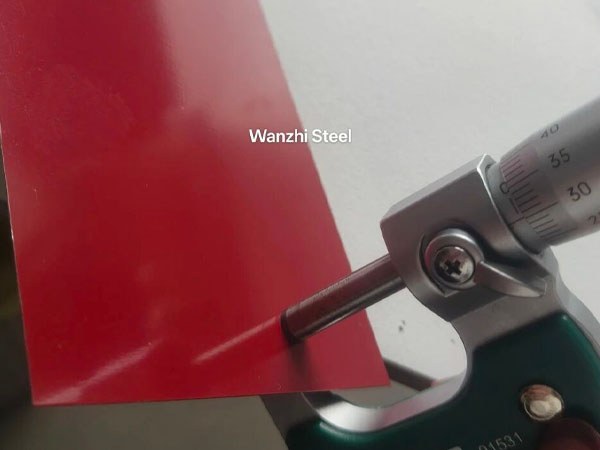
- Paint film thickness;
- Coating type;
- Surface treatment process.
It is recommended to specify the following parameters in the purchase contract:
| Item | Example |
| Product Type | PPGI / GI / GL |
| Substrate | DX51D / S350GD等 |
| Thickness | 0.5mm |
| Width | 1000mm / 1200mm |
| Zinc Layer | Z80 / Z120 / Z180 |
| Aluminum-Zinc Layer | AZ150 |
| Paint Type | PE / SMP / HDP / PVDF |
| Paint Film Thickness | 20μm |
| Color | RAL Color |
| Gloss | Gloss Level |
Product Specifications Should Be Standardized
Many quality disputes do not necessarily stem from problems on the supplier’s part, but rather from differences in interpretation between the two parties. Some descriptions do not provide sufficient guidance for production, such as:
Correct Product Specifications
| Confirm Item | Not recommended descriptions | Recommended clear descriptions | Example |
| Thickness | Thicker, but close enough | Specifically specify nominal thickness, actual thickness, and tolerance | 0.50 mm ±0.03 mm(According to ASTM A653) |
| Color | Blue, white, or close to the sample | Specifically specify RAL color code, gloss level, and surface finish | RAL 5010, Gloss 30±5, High Gloss / Matte |
| Coating Weight | Higher zinc coating | Specifically specify coating type and coating weight | GI: Z80 / Z120 / Z180; GL: AZ50 / AZ100 / AZ150 |
| Coating System | Ordinary paint is fine | Specifically specify coating type and application environment | PE, SMP, HDP, PVDF |
| Paint Thickness | Thicker paint | Specifically specify the thickness of topcoat, primer, and backcoat | Top 20 μm + Primer 5 μm + Back Coat 7 μm |
| Steel Grade | Ordinary steel | Specifically specify steel grade and applicable standards | DX51D, S280GD, SGCC, ASTM A653 CS Type B |
| Inspection Standard | Produced according to standard procedures | Specifically specify product application standards and testing standards | ASTM A653, EN 10346, JIS G3302 |
| Packaging Requirements | Normal packaging is sufficient | Specifically specify export packaging, rust prevention, moisture protection, and corner protection requirements | Waterproof Paper + Steel Sheet + Edge Protector + Wooden Pallet(optional) |
Don’t Wait Until After Unpacking the Container to Discover Quality Issues
Many quality issues with steel coils could have been resolved at the factory stage. However, in some procurement processes—supplier production → container loading → arrival at port → unpacking and inspection—problems are discovered at this stage:
- High replacement costs;
- Long lead times;
- Impact on customer projects.
A better approach → is to conduct a pre-shipment inspection (PSI). We recommend requesting the following from suppliers:
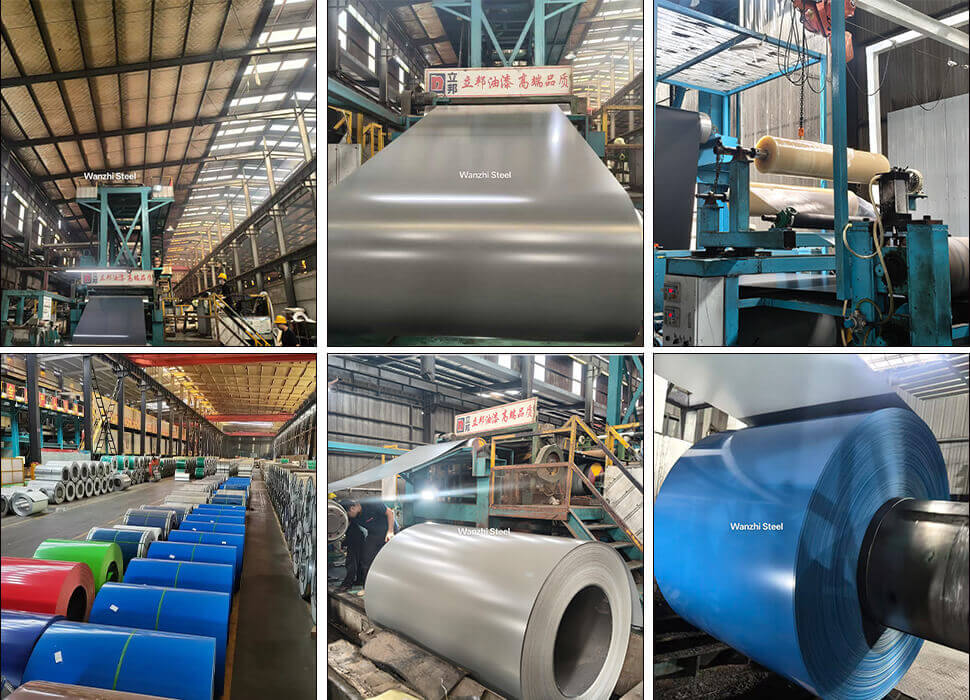
- Mill Test Certificate (MTC): Shows steel grade, chemical composition, mechanical properties, and coating information.
- Production process photos: Confirm production line operation, coil condition, and surface quality.
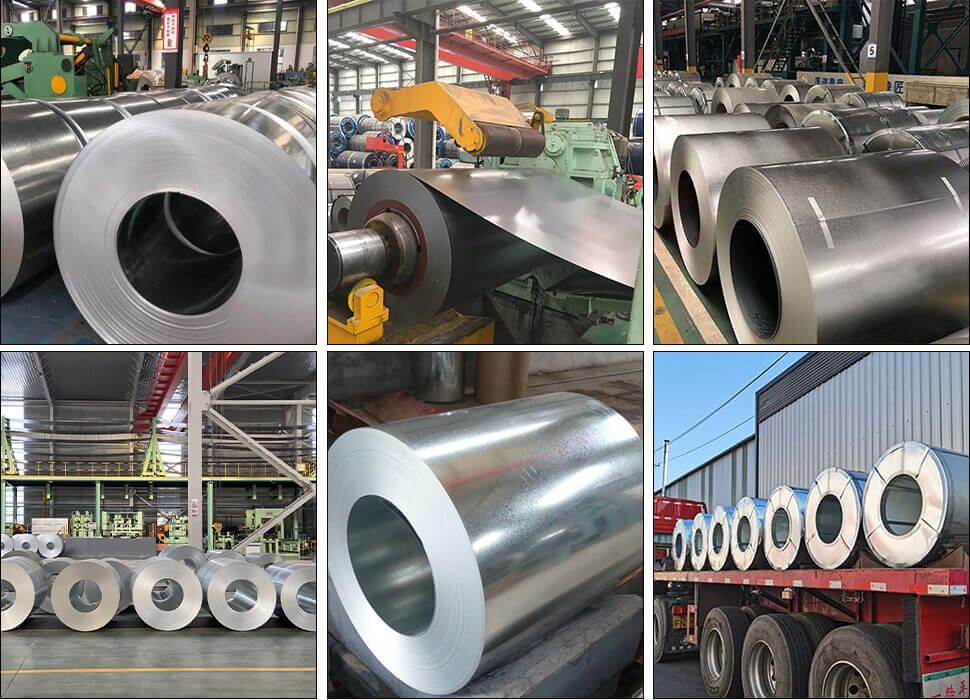
- Finished coil photos: Confirm coil appearance, label information, and packaging condition.
- Export packaging photos: Inspect waterproof packaging, corner protectors, steel strap securing, and packaging methods.
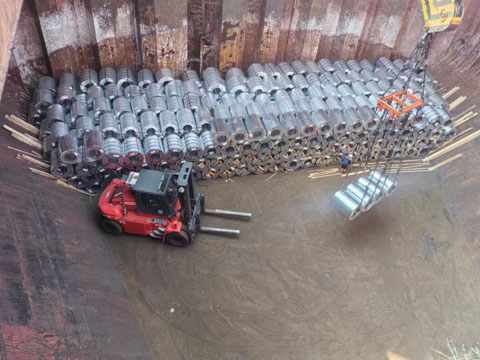
- Photos of container loading: To verify quantity, coil arrangement, and container loading status.
A genuine and professional supplier should allow customers to see how the product is manufactured, tested, and shipped from the factory. Quality control should take place before shipment, not after a customer complaint.
How WanZhi Steel Helps Customers Reduce Procurement Risks
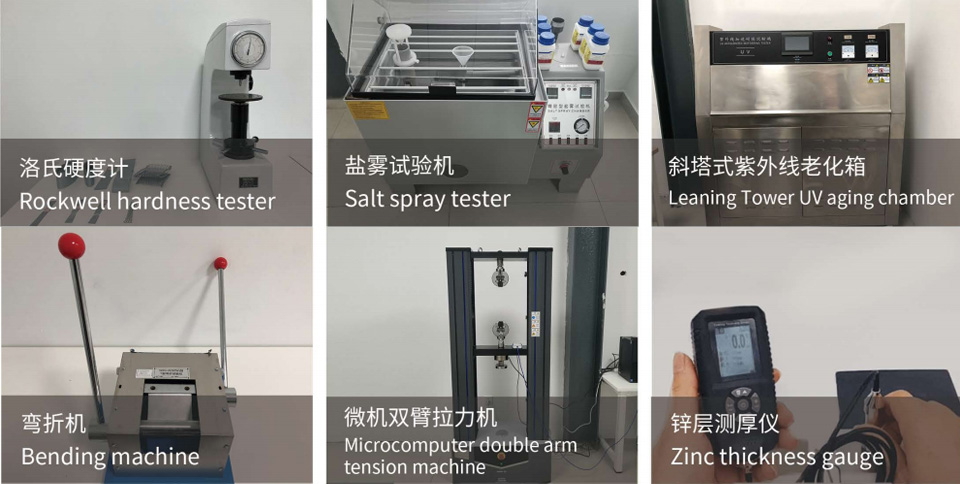
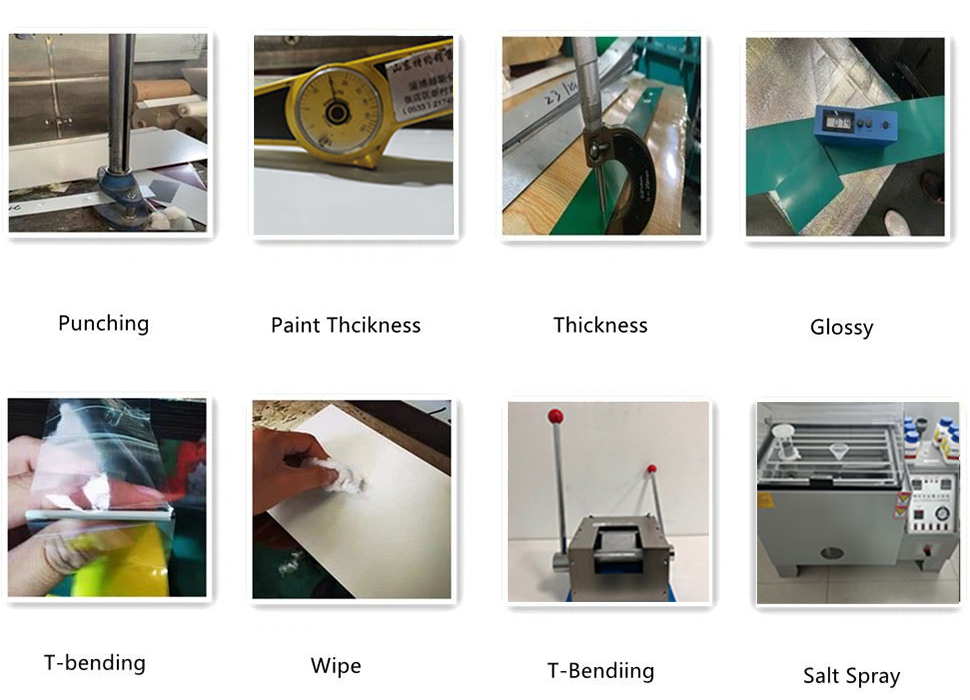
When it comes to purchasing PPGI, GI, and GL steel coils, WanZhi focuses not only on sample confirmation but also on the entire production process. Our quality control process includes:
- Confirming product specifications, technical requirements, and sample standards prior to production.
- Monitoring the production process, inspecting product condition, and providing production feedback during production.
- Providing quality inspection reports, production photos, and packaging photos prior to shipment to support customer inspection.
Through this comprehensive quality control process, we ensure that the bulk shipment received by the customer matches the initially confirmed samples.
Conclusion: Choose a Supplier, Not Just a Price
A high-quality sample only proves that a supplier can produce the product. A stable bulk shipment is what proves a supplier is worthy of long-term partnership. A truly reliable steel coil supplier should possess:
Wanzhi Steel possesses all of the above capabilities and has a large base of loyal customers. If you are looking for a genuine and trustworthy steel supplier, please choose us—we are committed to providing a stable and consistent supply of high-quality products.