
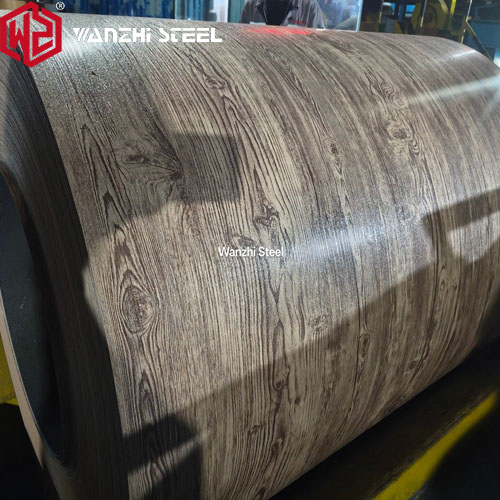
Wood-grain Steel Sheets for Cabinets
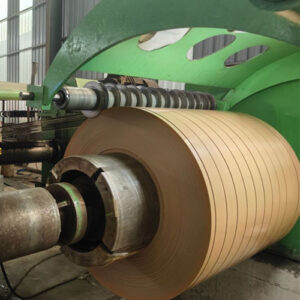
Wood-grain steel sheets are decorative steel sheets made from a metal base, with a wood-grain effect created on the surface through processes such as printing, coating, or lamination. They combine the visual appeal of natural wood with the strength and durability of metal sheets.
For products such as kitchen cabinets, storage cabinets, and furniture door panels, wood-grain steel sheets overcome the limitations of natural wood in humid environments while providing a more uniform and consistent surface finish.
Ensure product quality and transportation
When used to manufacture cabinets, wood-grain steel sheets can be used in humid environments without suffering from the swelling or warping at the edges and corners that natural wood experiences in such conditions. The surface features a natural wood grain pattern, making it both attractive and durable.
Currently, the mainstream patterns available on the market include light straight-grained oak, North American black walnut, white oak, red rosewood, and golden brown antique wood. We are capable of producing all of these wood-grain steel sheets.
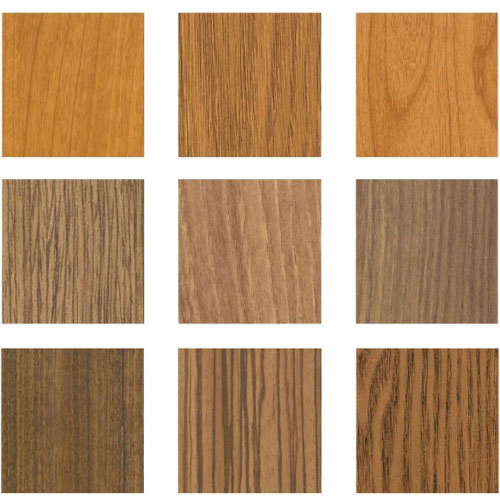
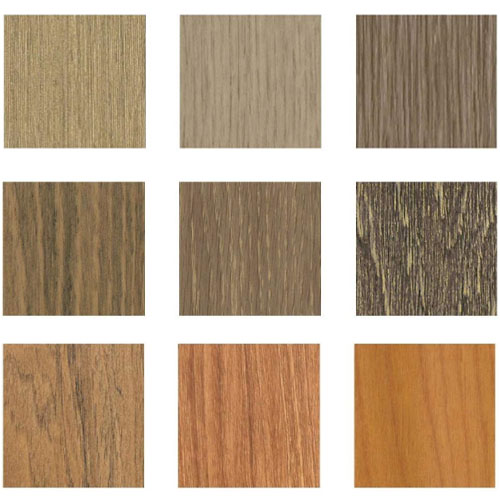
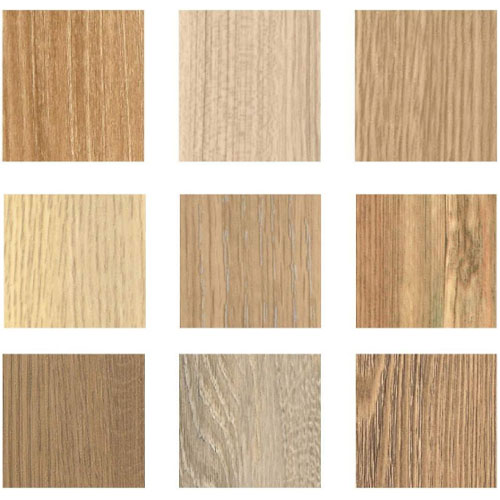
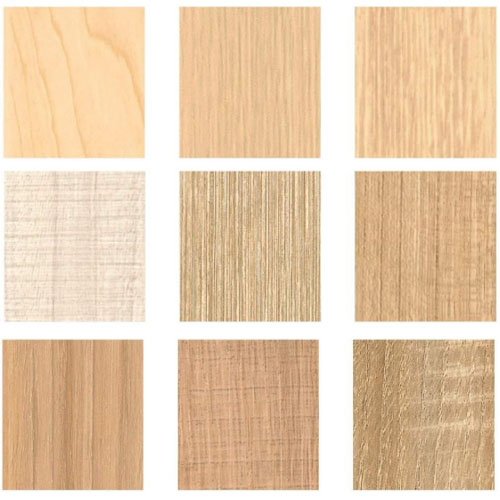
We Supply Wood-grain Steel Sheets for Kitchen Cabinets
Our product lineup includes printed wood-grain steel and laminated wood-grain steel. Both products are based on steel sheets and feature a wood grain pattern achieved through different surface finishing processes; however, they differ significantly in surface structure, wear resistance, service life, workability, and price. When making a purchase, you can choose based on the cabinet’s intended use, fabrication methods, operating environment, and budget.
Printed Wood-Grain Steel
Production Process
Printed wood-grain steel, also known as printed color-coated sheet, is produced by first pre-treating and coating the steel sheet surface, then using precision rollers to print the wood-grain pattern directly onto it. Finally, a layer of transparent protective varnish is applied, and the sheet is cured through high-temperature baking.
Advantages
- Fast turnaround: The printing process allows for flexible pattern changes—oak, walnut, cherry, teak, and more… Most common wood species can be reproduced, and assembly-line production ensures rapid turnaround.
- Affordable: Compared to the laminating process, printed steel has lower manufacturing costs, making it the most competitive choice for budget-sensitive projects or high-volume cabinet manufacturers.
- Adequate Performance: With a corrosion-resistant coating and organic paint on the surface, it offers sufficient protection against everyday water, moisture, and oil stains.
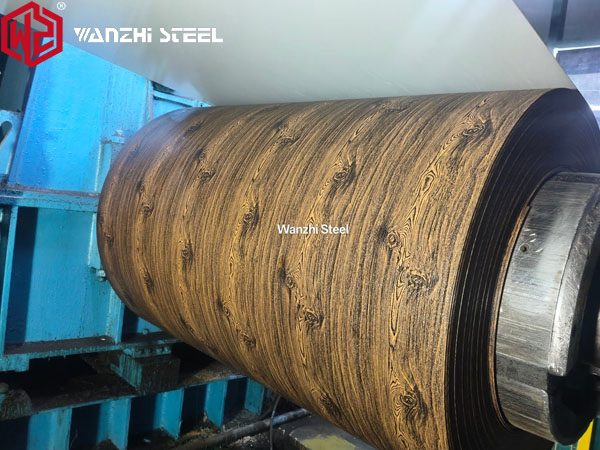
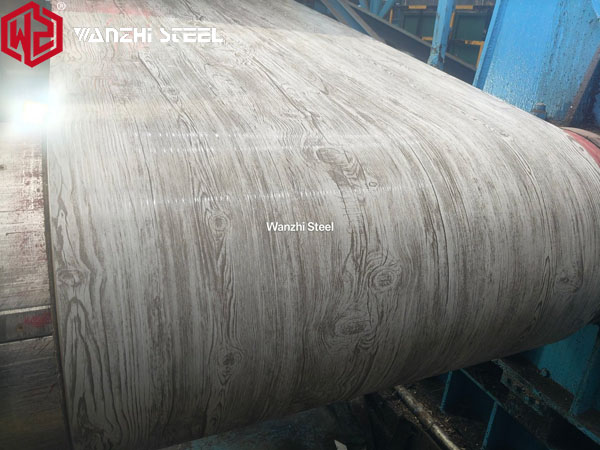
Laminated Wood-Grain Steel
Production Process
Laminated wood-grain steel, also known as VCM (Vinegar-Coated Metal), is produced by thermally bonding a layer of PVC or PET wood-grain film to the surface of a steel sheet under high temperature and pressure. The thickness and density of this film far exceed those of a printed coating.
Advantages
- Texture closer to real wood: The surface texture is more lifelike, featuring the raised and recessed patterns of wood, with more natural detail reproduction.
- Excellent scratch and wear resistance: The wood-grain film is dense and elastic, offering scratch resistance that is approximately three times greater than that of standard printed sheets.
- Better processability: During deep drawing, bending, and 90-degree right-angle forming, the film layer deforms along with the steel sheet without cracking, peeling, or delamination.
- Longer service life: Laminated steel offers superior weather resistance and corrosion resistance compared to printed steel, resulting in a longer service life.

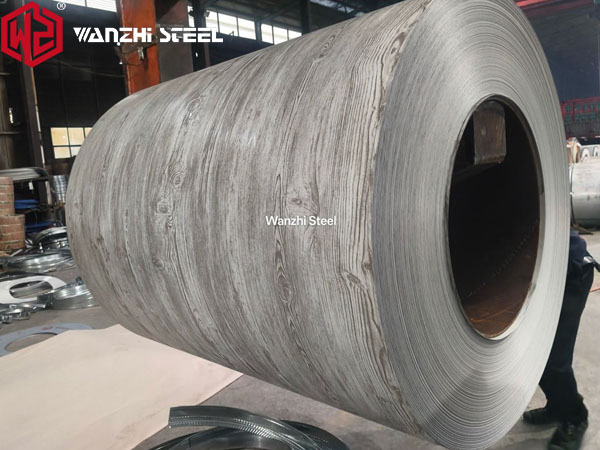
Specifications and Parameters
| Product Name | Wood Grain Printed Steel | Laminated wood grain steel |
| Surface Treatment | Roller printing of wood grain patterns + clear varnish baking | High-temperature, high-pressure thermal lamination of PVC/PET wood grain film |
| Common Substrates | Galvanized steel coil, aluminized zinc steel coil | Galvanized steel coil, cold-rolled steel coil, stainless steel coil |
| Thickness | 0.20 – 1.20 mm | 0.30 – 1.50 mm |
| Common Cabinet Thickness | 0.35mm / 0.40mm / 0.45mm / 0.50 mm | 0.40mm / 0.45mm / 0.50mm / 0.60 mm |
| Common Width | 600 – 1250 mm | 600 – 1250 mm |
| Supply Form | Roll material / Flat sheet | Roll material / Flat sheet |
| Surface Layer Thickness | Front coating 15 – 35 μm | Decorative film 0.08 – 0.19 mm |
| Wood Grain Texture | Flat printing, good color reproduction | Three-dimensional texture, tactile feel close to solid wood |
| Scratch Resistance | Good, abrasion resistance ≥300 times without showing the base material | Excellent, approximately 3 times that of printed steel |
| Moisture and Corrosion Resistance | Good | Excellent, completely sealed film layer |
| Pricing | High cost performance | High-end positioning |
| Typical Applications | Factory mass production cabinets, cost-effective cabinets | High-end customization, suitable for use in humid areas |
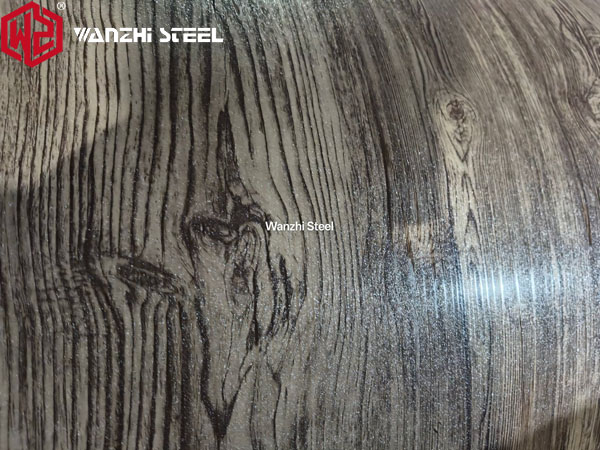
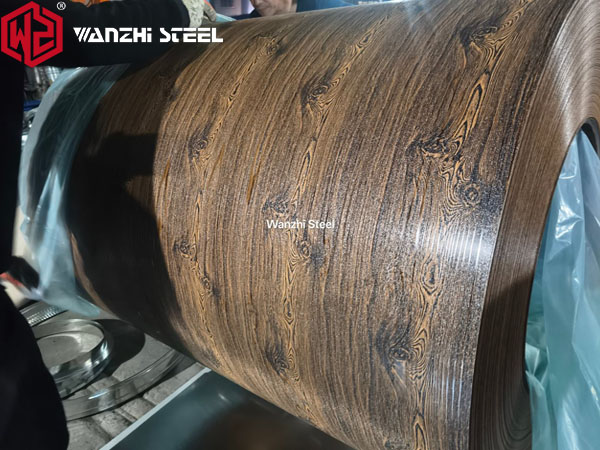
Applications of Wood Grain Steel Sheets for Cabinets
- Cabinet Doors: This is one of the most common applications of wood grain steel sheets. The wood grain surface can directly serve as the main decorative surface of the cabinet, suitable for flat doors, bent doors, and other structures.
- Cabinet Side Panels: For cabinet products requiring a unified appearance, the side panels can use the same wood grain steel sheet as the door panels, ensuring consistency in color and texture throughout the cabinet.
- Drawer Fronts: Wood grain steel sheets can be used for exposed drawer fronts, creating a unified design style with the cabinet doors.
- Storage Cabinets and Kitchen Furniture: In addition to traditional cabinets, it can also be used for kitchen storage cabinets, sideboards, wardrobes, filing cabinets, and other metal furniture.
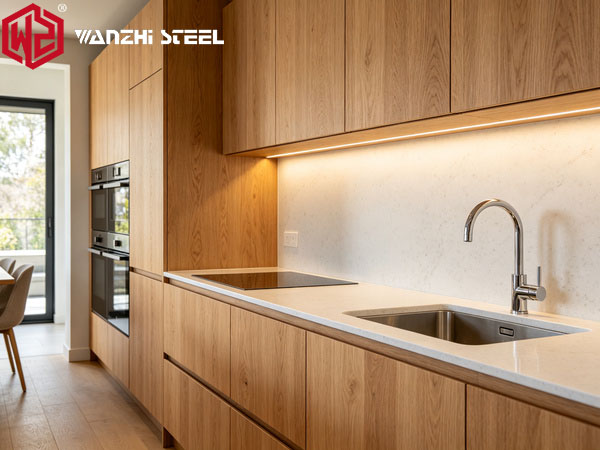
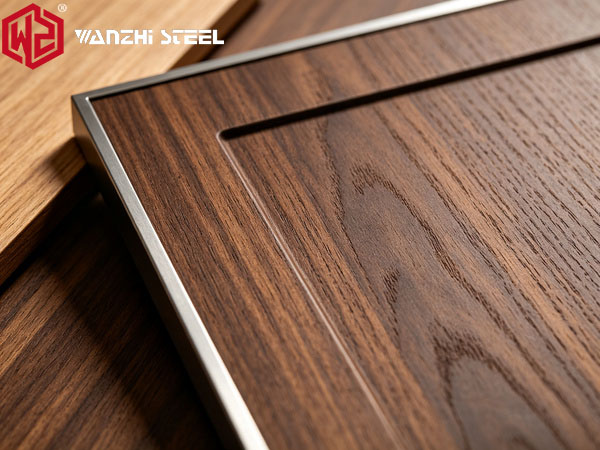
How to Choose the Right Wood-Grain Steel for Cabinetry
- How to Choose the Thickness: For cabinet doors, a thickness of 0.4–0.5 mm is generally sufficient. If the material is too thin, it’s prone to warping; if it’s too thick, it unnecessarily increases costs.
- Don’t Skimp on the Zinc Coating: Many people focus only on the surface wood grain and overlook the amount of zinc plating on the base sheet. Since kitchens are humid environments, we recommend that the zinc coating on cabinet steel sheets be ≥80 g/m².
- Slitting to Custom Widths: Standard coil widths are up to 1,250 mm. We can pre-slit the material according to your cabinet door dimensions, allowing for direct punching and bending upon arrival at the factory, thereby reducing scrap waste.
What else can wood-grain steel sheets be used to make?
- Cabinet Doors: The most common application, suitable for both wall cabinets and base cabinets.
- Closet doors: A good option for those who want a natural wood look in their bedroom but are concerned about moisture causing warping.
- Balcony cabinets: Balconies are exposed to sunlight and experience significant temperature fluctuations, so metal panels are much more stable than wood.
- Bathroom vanities: In the high-humidity environment of a bathroom, wood-grain steel panels are practically unbeatable.
- Wall paneling and accent walls: Widely used in commercial spaces and public areas, they provide a cohesive look and are durable.

Why Choose Us?
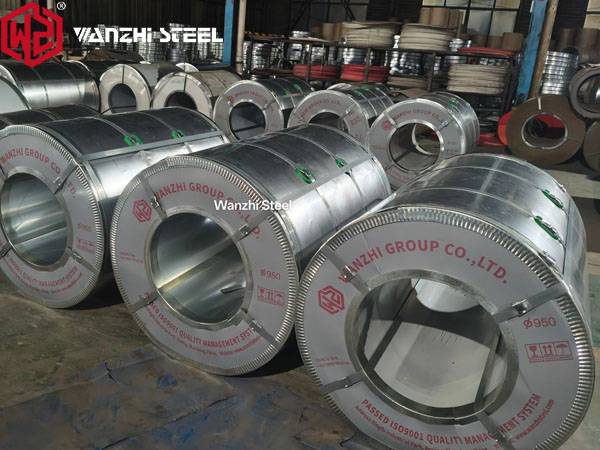
- We utilize advanced production processes and can supply wood-grain steel manufactured using various techniques, offering a wide range of options.
- We select high-quality base materials, and the entire production process undergoes rigorous testing.
- We offer a wide variety of wood-grain colors and can customize products based on your samples.
- Our production lines are highly efficient, ensuring consistent delivery and stable straightness.
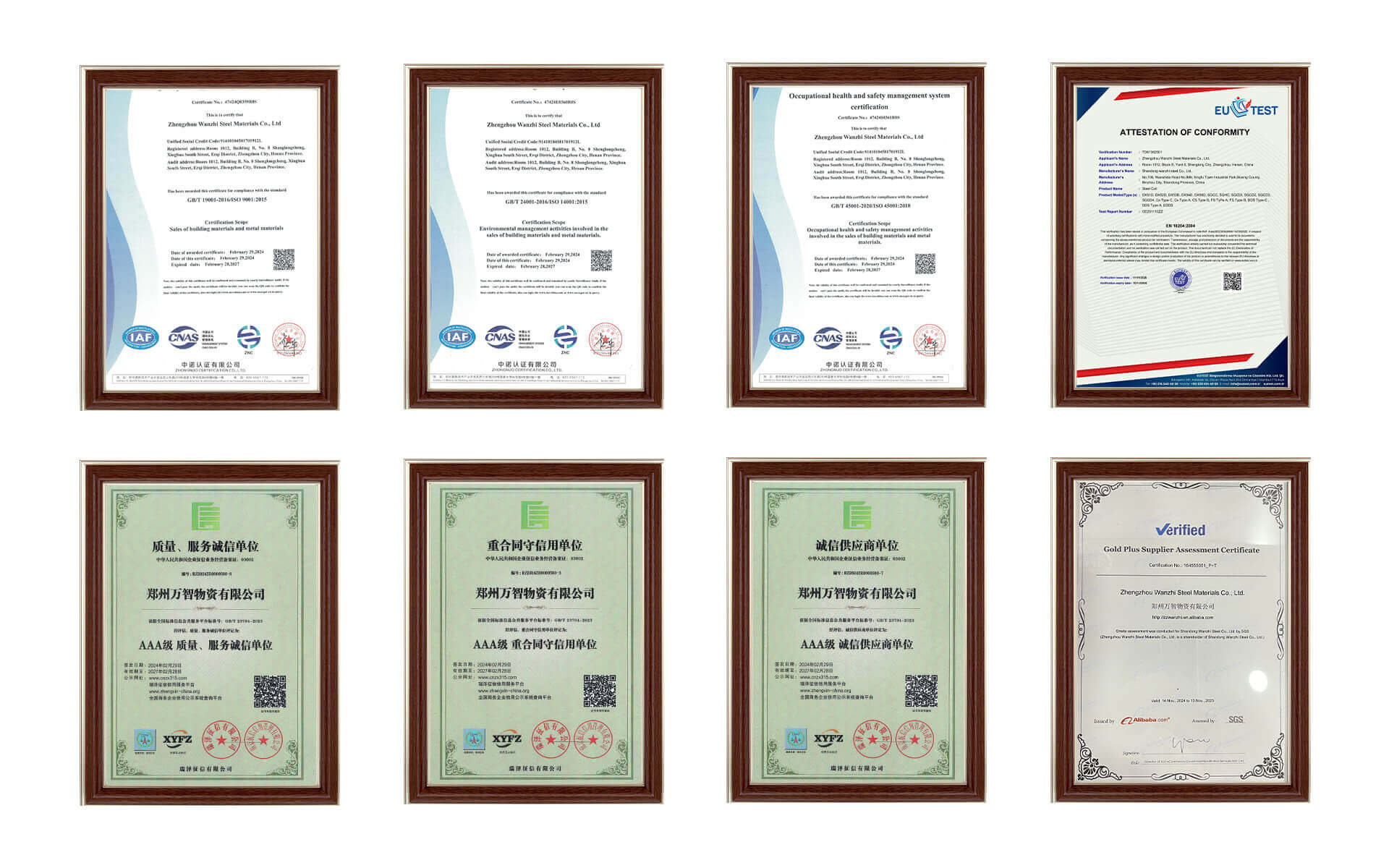
- We have obtained multiple certifications, including ISO 9001, ISO 14001, ISO 45001, CE, and SGS (please see our SGS production report).
If you need to purchase printed steel coils or other types of color-coated steel products, please feel free to contact us at any time.