
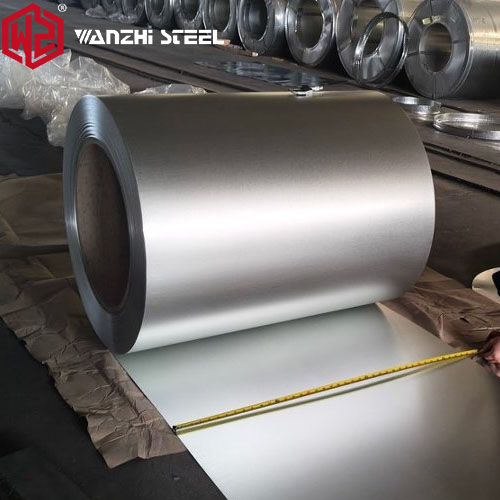
Chapa de aço galvanizado Zero Spangle Z275
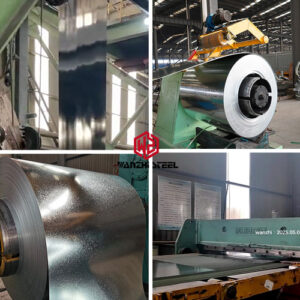
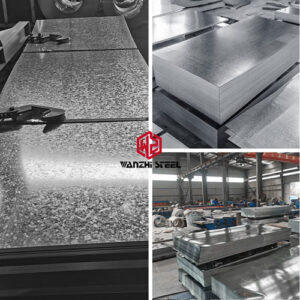
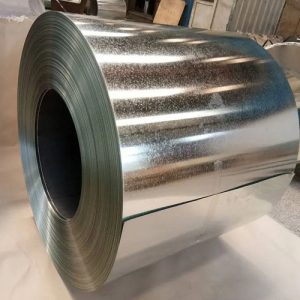
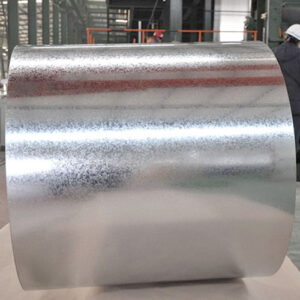
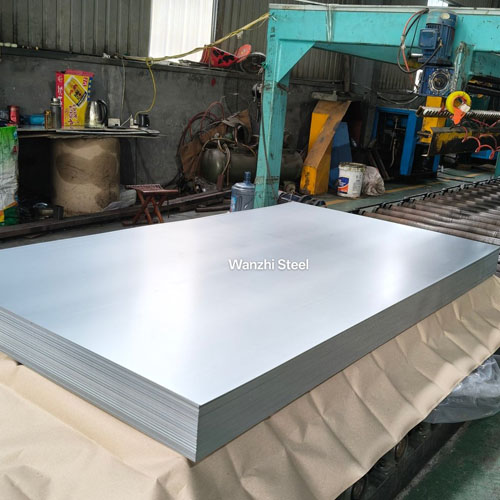
Zero Spangle Z275 is a high-zinc-coating specification of aço galvanizado por imersão a quente, offering excellent corrosion resistance and a uniform, matte silver-gray finish.
This product is widely used in the home appliance manufacturing industry, especially in areas like the back panel, where specific requirements exist for corrosion resistance, surface uniformity, and coating adaptability. Zero Spangle Z275 performs well in these aspects.
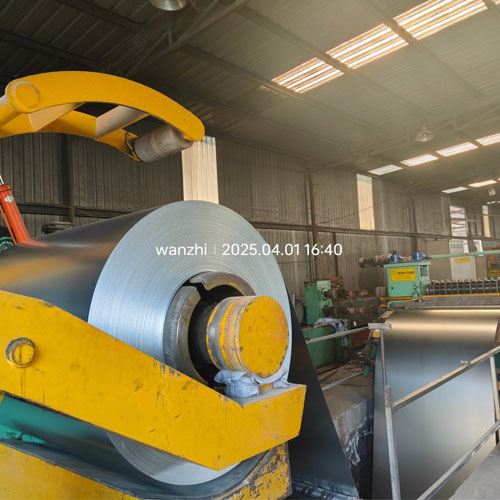
Garantir a qualidade do produto e o transporte
Zero Spangle Z275 galvanized steel sheet, officially named “Zero Spangle-Free (Smooth) Hot-Dip Galvanized Steel Sheet,” uses cold-rolled low-carbon steel coils as the base material. It undergoes a continuous hot-dip galvanizing process to coat both sides with a pure zinc layer. The zinc layer weight designation Z275 indicates that the average weight at three points on both sides is not less than 275 g/m².
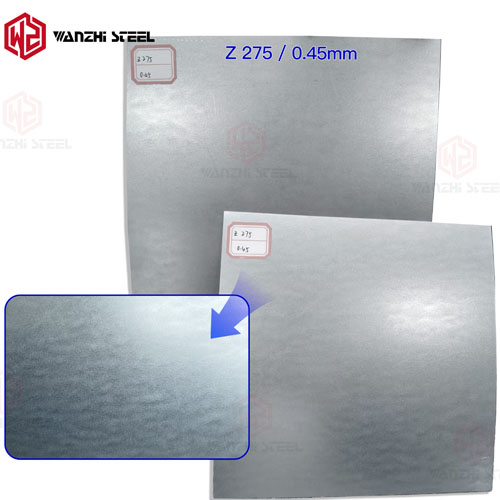
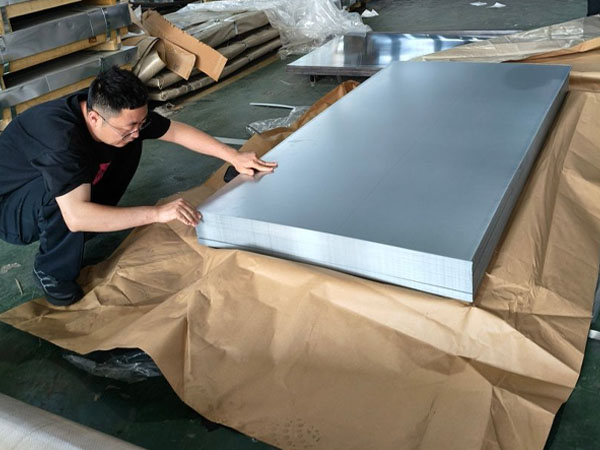
“Zero Spangle” does not mean the surface is completely free of zinc; rather, it means that the visible zinc spangle crystal patterns have been virtually eliminated. One direct benefit of a zero-zinc-spangle surface is that it ensures a uniform paint film during subsequent powder coating, painting, and lamination, preventing color differences and orange peel effects caused by uneven zinc spangles.
Especificações
| item | Parâmetro |
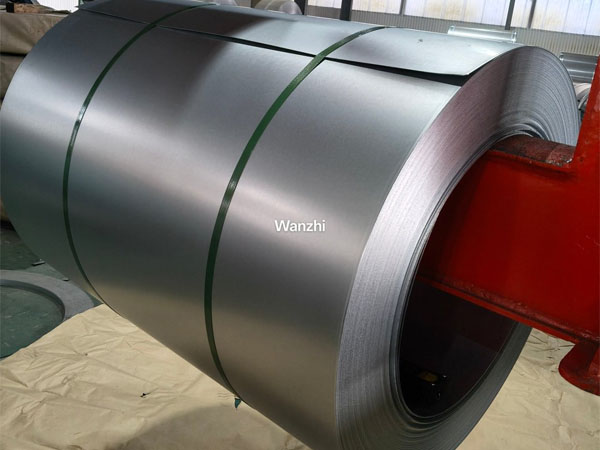
| Nome do Produto | Zero-spangle (spangle-free) hot-dip galvanized steel sheet/coil |
| Padrão de Execução | GB/T 2518-2019, EN 10346, ASTM A653, JIS G3302 |
| Graus Comuns | DX51D+Z275, DX52D+Z275, DX53D+Z275, S250GD+Z275, S350GD+Z275, etc. |
| Peso do revestimento de zinco | Z275 (275 g/m² on both sides, three-point average) |
| Faixa de Espessura | 0.30 mm – 3.0 mm (commonly used for appliance back panels: 0.40–1.0 mm) |
| Faixa de Largura | 600 mm - 1250 mm |
| Inner Diameter / Length | Coil inner diameter 508 mm / 610 mm; standard length 1–12 m, customizable |
| superfície | Zero Spangle (spangle-free) |
| Tratamento da superfície | Chromate passivation (C), chromium-free passivation (CO), fingerprint-resistant (NF), and oil coating (O) can be combined. |
| Qualidade da Superfície | FB (higher grade), FC (high grade, suitable for exposed surfaces after deep drawing) |
| MOQ | Toneladas 10 |
| Embalagens | Standard export packaging (plastic film, moisture-proof paper, and galvanized iron sheet) or as per customer requirements |
How is Zero Spangle Formed?
To understand how zero spangle is formed, we need to know how ordinary zinc spangle is formed.
How Ordinary Zinc Spangle is Formed
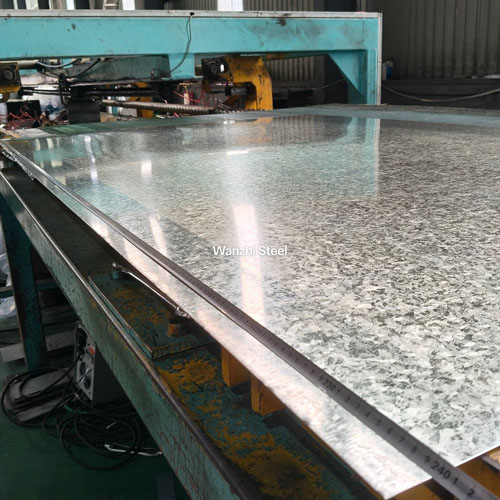
After the steel is removed from the zinc pot, during the cooling and solidification process of the molten zinc, there are fewer crystal nuclei and the grains grow faster. Zinc atoms grow along the hexagonal crystal axis to form dendritic crystals, which are the zinc spangles visible to the naked eye. Lead and antimony in the molten zinc reduce surface tension, allowing zinc atoms to diffuse faster and the spangles to grow larger.
How to Make Zero Spangle?
- First, adjust the composition of the zinc pot, mainly the lead content.
- Second, rapid cooling after the air knife. Zero spangle is achieved by directly applying high-flow-rate air cooling or mist cooling after the air knife, increasing the cooling rate to 15–25℃/second.
- Third, smoothing and flattening. Even after solidification, the plate still exhibits microscopic grain undulations. A fine grinding roller is used to smooth the surface with a small reduction rate of 0.5%–2%, flattening these microscopic undulations.
Why is achieving zero zinc spangles in Z275 zinc coating more difficult?
The thicker the zinc coating, the more difficult it is to achieve zero zinc spangles. The reason is simple—Z275 contains more than twice the zinc of Z120, resulting in more heat being carried away by the steel strip and a longer cooling time, allowing the grains to still have a chance to grow.
To achieve zero zinc spangles on the production line for Z275, the cooling fan power must be increased, the air knife gap adjusted, and the zinc pot temperature controlled more strictly. The overall line speed also needs to be reduced. This is why, even though both are zero-zinc-spangle sheets, Z275 is significantly more expensive than Z120—not because the material is more expensive, but because of the slower production pace and stricter process control.
Advantages of Z275 Galvanized Steel with Zero Spangle
- Adequado para ambientes úmidos: The Z275 g/m² zinc coating thickness is sufficient to resist corrosion in humid environments. When combined with passivation or a fingerprint-resistant coating, the service life of Z275 is effectively doubled.
- No Zinc Coating Cracking During Stamping and Bending: The bond strength between the zinc coating and the base metal in Zero Spangle galvanized steel sheets is superior to that of ordinary galvanized steel sheets. During actual stamping and bending to 180° (d=0), the outer surface will not exhibit zinc coating peeling or flaking.
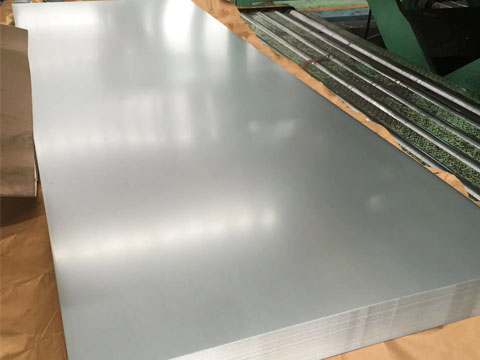
- Superfície lisa e uniforme: This is the most obvious difference between zero-zinc-flower sheets and standard zinc-flower sheets. Zero-zinc-flower galvanized steel sheets have a smooth surface, whereas standard zinc-flower galvanized steel sheets exhibit zinc flowers and crystalline patterns on their surface.

Aplicações
- Home Appliances (Primary Applications): Refrigerator back panels, washing machine side panels, outdoor unit housings for air conditioners, microwave and oven housings, etc.
- Construção e estruturas de aço: Factory roof panels, wall panels, floor decking, etc.
- Ventilation and Smoke Exhaust Ducts: Central air conditioning ducts, fire protection smoke exhaust ducts, etc.;
- Armários e estantes: Bridge power distribution box housings, file cabinets/tool cabinets, etc.; advertising sign backing panels; warehouse shelving;
- Transportation and Agriculture: Truck cargo compartment liners, container components, livestock barn siding, feed storage equipment.
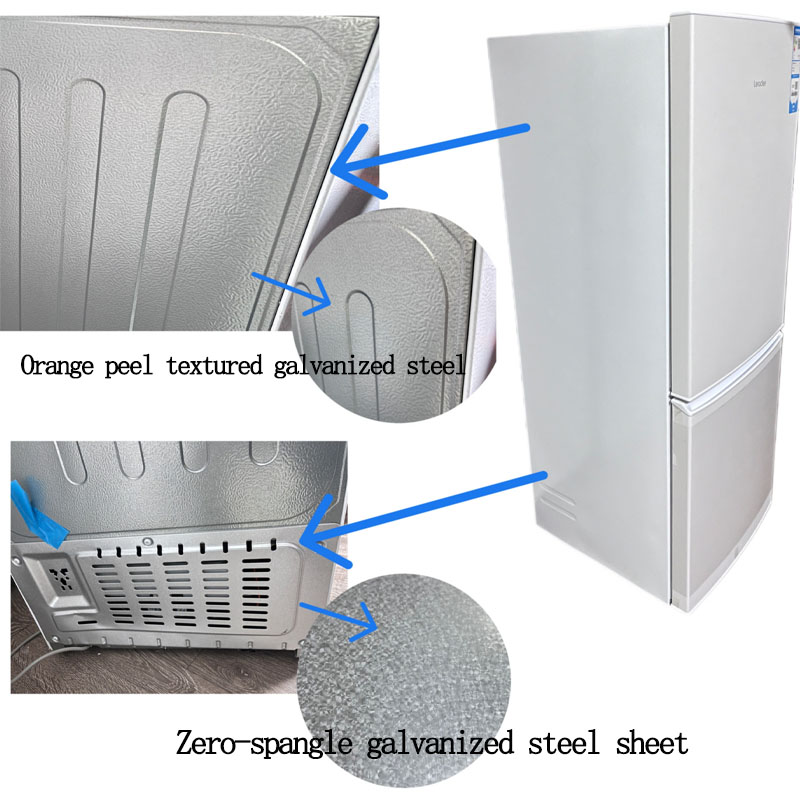
Why Is Zero Spangle Z275 Galvanized Sheet Suitable for Home Appliance Back Panels?
Painéis traseiros do refrigerador
This is the most representative application. Refrigerator back panels are mounted against the exterior of the condenser and piping, where they are constantly exposed to high humidity and occasional condensation. The zinc coating thickness of Z275 is significantly greater than that of commonly used Z120 and Z180 grades, resulting in a notably longer corrosion-resistant lifespan in condensation environments. It can also withstand stamping processes.
Washing Machine Casing and Inner Drum Bracket
The casing undergoes stretching and bending before being spray-painted; the paint film adhesion on a zero-zinc-bloom surface is a notch higher than that of ordinary zinc-bloom sheets. The inner drum bracket comes into direct contact with laundry detergent and water; the thick zinc coating of Z275 can withstand long-term corrosion from alkaline detergents.
Air Conditioner Outdoor Unit Casing
Outdoor units are constantly exposed to rain and temperature fluctuations year-round, and some are even installed in coastal areas with high salt fog levels. When Z275 is combined with chrome-free passivation or fingerprint-resistant treatment, it can withstand salt spray testing for over 120 hours without red rust appearing—providing more than double the protective margin compared to Z120 products.